Showing posts with label fun facts. Show all posts

Monday, December 22, 2014

Mistletoe

     There is a Norse myth about the tiny plant mistletoe and how such a harmless bush can bring down Balder, the Norse god of Truth and Light. The plant itself is a parasite, it latches onto the crown of a tree or other plant and forms a haustorium, which allows the mistletoe to leech water and nutrients from the host plant.
     In the ancient world it was illegal to fight in the presence of mistletoe. It was the plant of peace, from the time Balder was killed enemies laid down their arms if they happened to pass under the plant. Lore says the mistletoe forevermore agreed to bring love rather than death and it was Frigga's (Balder's mother) tears which became the plant's berries.
     Mistletoe has also been considered an aphrodisiac and has abortifacient qualities linking it with ancient erotica. Here is a root for the modern tradition of kissing under mistletoe during the winter holidays. The mysticism can be compounded by mistletoe's evergreen leaves while its host plant loses all sense of life in the dark winter months.

Monday, May 20, 2013

The Universal Unit System

     This semester I took a Ballroom class at my university and it was fascinating. Not only did we learn the dances (Country Two-Step, Cha Cha, Waltz, Tango, Nightclub Two-Step, and some others) but we learned about the Universal Unit System which is a way that you can measure music to make it easier to learn. It was designed by Skippy Blair and it is a pretty awesome way to learn difficult dances. 
     We had to write a paper to show we understood the concepts from class, here's some of it: 
     The Universal Unit System is designed to describe the weight changes in dance. Each two beats of music is one unit and the weight changes can be described in three ways: single, double, and triple. A single unit is one where there is only one weight change in the two beats. A double is two weight changes in those two beats, and a triple is three weight changes in two beats of music. There are two different types of single unit: a standard and a delayed single. A delayed single differs from the standard or regular single in that the weight change is on the second beat of the unit, rather than the first. There is also an empty unit where the dancer does not have a weight change.
     How these measurements appear on paper is with dots and slashes. The single unit will have either a dot and slash or a slash and dot—the dot is a weight change while the slash is a hold of some sort: a tap, ronde, or some other movement that does not shift weight from one foot to the other. The double unit will have two dots for a single unit, and the triple will have two large dots with a smaller one in the middle. This smaller dot means the triple step is syncopated: it doesn’t have an even distribution of the time between steps. The steps are placed against cards measured for the beat of the song. In the case of a Country Two-step, the dance is set to 4/4 time (4 beats of music with the quarter note determining the beat) and the steps are single, single, double. It looks like:  The “&a” between each count is how the space between each beat is measured. How 
this is counted is a “slo-ow, slo-ow, quick, quick, slo-ow, slo-ow, quick, quick” saying each syllable on a beat. The difference in the notation between a slow in Country Two-Step and a staccato dance like Tango is a smaller dot below the dot like musical notation has a small dot to indicate staccato.
     I really enjoyed the class and this system is something I think I'll be able to use in the future when I try to learn new dances.

Just a thought...
Stephie

Saturday, March 30, 2013

Thyroid Cancer Prevention?

     I was talking to my grandmother recently and she was reading one of those forwarding e-mails, I don't know how true it is, but it sounds plausible. The info originated on Dr. Oz or some such television show.
     When you go to the dentist and get X-rays most people don't realize that your thyroid is right below your jaw. We're told that constant exposure to radiation can cause cancer and it makes sense that regular exposure to radiation at the dentist (or during mammograms for women) can increase your risk, or cause cancer. But there is a guard to protect you; a flap on the apron at the dentist's office and a "thyroid guard" to wear during mammograms are available, but most people don't know about it or don't use it.
     Why don't we know about it? I don't know, maybe it's just a lack of information. If so, let's spread the word.

Just a thought....
Stephie

Thursday, February 14, 2013

Valentine's Day

     This isn't going to be one of those ushy-gushy love posts, nor is it going to be an "I hate Valentine's Day" post. I just want to question why it is so important to have a relationship on a random day in February?
     I understand the history behind why the day itself is associated with love: in Roman times St. Valentine was marrying couples in the Christian faith against Roman law and was killed for his faith in Christianity and for breaking the law. We celebrate his commitment to love and to his faith (didn't think it was a religious holiday, did you?) every year. But why do we have to go out and fight to have plans on the one day? Maybe I'm happy with my book and music, or maybe I want to spend the day with my boyfriend; why do I have to go to the effort of planning something on February 14th? Answer: Secularization. When people noticed that there was a story that celebrated love and they could make money off of it, capitalism picked up the ball and ran.
     That's all fine and dandy, but why is there such a pressure on girls (I'm not sure guys are pressured nearly as much, or looked down upon for not having a date) to find a date and spend time with them. I love the idea of planning out a time to celebrate love, but quit pushing me to give my time to someone I'm not going to invest the rest of my life in, let alone the next couple months. Let me find love and romance in my own time. Let me make plans with friends and celebrate romance the rest of the year rather than just one week in February. But thank you for February 15th when most people flock to the stores and find chocolate for much cheaper than normal, it's a nice break for those chocoholics out there.

Just a thought...
Stephie

Monday, January 28, 2013

Boomerang Nebula

Hubble Space Telescope
     So I was talking to a friend today and we got into some pretty interesting stuff about science and the universe. Bottom line is that this guy knows a whole lot about physics for a history major. He told me about this place that's known as the coldest naturally occurring place in the universe: the Boomerang Nebula. Apparently it's in the Centaurus constellation and it's colder than actual space.
     The Nebula has such a cold temperature because it's releasing gas from the star's core and expanding at a rate of 164 km/s. It's located 5 thousand light years away and is pretty neat. The scientists who first saw it in 1980 only saw the Nebula's bend, but after viewing through the Hubble Space Telescope some scientists now call it the Bowtie Nebula.
     There are places that are colder, such as Wolfgang Ketterle's lab at MIT in Cambridge, where temperatures have reached 810 trillionths of a farenheit degree above absolute zero, but the Boomerang Nebula is the coldest known naturally occurring place in the universe. It's incredible!

Just a thought...
Stephie

Tuesday, January 8, 2013

Music

    So my friends all think my taste in music is crazy. My brother can't stand it. And my sister changes the radio to the one preset in my car that holds her radio station. But what makes my music any different than anyone else's? Yeah, I listen to country, but I also listen to classic rock, modern pop, 80s pop, and anything but rap (I still don't understand the appeal of rap). My gra'ma only likes to listen to classical or big band, so I keep a nice selection of it in my iTunes. Mom prefers holiday music after Thanksgiving (if you don't like Christmas music, good luck near my mother after December 1st) but otherwise likes the eclectic mix of Pink, Kelly Clarkson, Electric Light Orchestra, and George Strait. Dad enjoys mostly the stuff that was popular before I was born--classic rock and oldies. What makes my preference of everything so different.
     Every day we're exposed to so many different sounds that mix together and combine to create music. It could be considered the music of our lives and its all those little sounds, like the sound of pages turning in the library, friends laughing, computer keys clicking, a family member's voice in the other room, they're all sounds that speak to each person differently. It's the reason STOMP has gained popularity even though they don't use traditional instruments.
     What makes one person like a particular type of music more than another kind?

Just a thought...
Stephie

Friday, December 21, 2012

End of the World

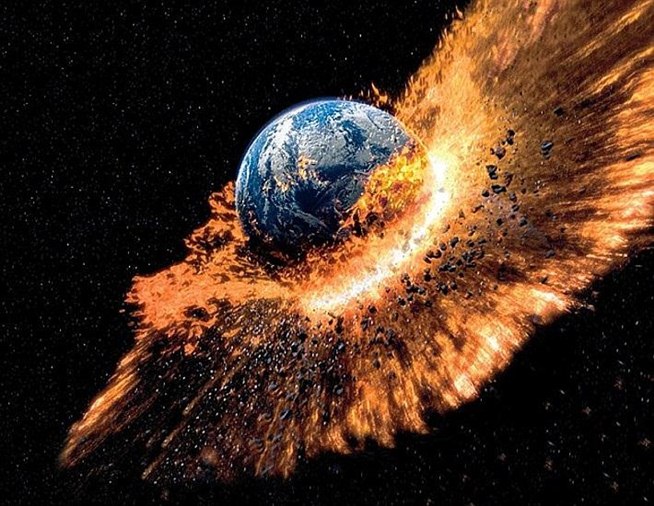
     Why is everyone freaking out about the end of the world? I'm only twenty-two and I've lived through more "end-of-the-world" scenarios than nearly any other era of history: Y2K and the electronics apocalypse of 2000, 9/11 and the terrorist attacks on the United States as well as the ensuing war, about twelve different dates for Armageddon, and now this--the end of the Mayan calendar. Is it that we have a fascination with death and destruction? Is it that we see something morally wrong with where we're all going? Or is it that it's really entertaining to propose a world-wide event and make believe that it'll happen?
     When I took a class on Fairy Tales, we discussed the stories as ways of coping with the moral dilemmas of our daily lives. The stories allowed us to live through these terrifying and traumatizing events without actually being physically harmed in the process, they were entertainment for the dark side of the human psyche. Is that what we're doing now, with these end of the world, death and destruction stories? Movies like 2012 and The Day After Tomorrow have become manifestations of our fear of the end of the world, and turning it into something that fascinates and entertains us. Decades ago, these same stories would be the Grimm versions of Cinderella, Rapunzel, Snow White, Iron John, and so many more myths and legends. They've been extended beyond the individual level--a single person's world is falling apart--to the destruction of all peoples and their worlds.
     Long, rambling, story short: these stories of Earth's destruction are the modern stories that help us deal with the problems of society and the fear of what's coming next. There is a place for such stories, but we, as everyday people, do not need to believe them in a literal sense.

Just a thought...
Stephie

PS. We're still here.

Friday, November 16, 2012

Existentialism

     Nearly everyone I've talked to about existentialism has been confused about it. I'm a little confused how they can be so confused. From what I understand it's just the belief that existence is created from the choices and experiences of a person. Every person has the right to make their own decisions--this is where liberty and freedom come into it--and if a person doesn't have the freedom to make their own choices you're experiencing oppression. That's my understanding.
     Part of it though is a willingness to live with the consequences of your actions. I think that's where people get confused. We talk about how life isn't fair and how bad things happen to good people, which is true, but at the same time it's because the good people take responsibility for their actions that bad things happen to them. People I've classified as 'bad' in my life have had the tendency to let other people take the blame for their mistakes and missteps. And I've noticed that because the other people (the good people) are more willing to take the blame, even when it doesn't belong on their shoulders, the people I've always labelled 'bad' don't have to take responsibility for themselves.
     What happens when the 'good' people no longer are willing to take responsibility for someone else's actions? I like the ideas put forth by the school of Existentialism, for the most part, they make the world make sense.

Just a thought....
Stephie

Sunday, November 11, 2012

Perception

     Charles Bukowski once said something about the world being smeared with the color of forgotten love. I thought it was a beautiful image, but something about the color stayed in my head. What color is forgotten love? Is it a murky kind of purple, or a deep clear blue; maybe it's a rich red, the color of blood, or a rust red--dried blood.
     I'm working on my senior project, my capstone, and the theme is "Image + Words = Picture". This confusion about what color Bukowski's forgotten love is plays into this idea. Every single person makes a judgement when they see an image. The meaning derived from the image is connected directly to the  culturally agreed upon definitions and personal experiences of the viewer.
     There are things the brain filters out of what we see. The biggest example of this is your nose. It's always there, right in the middle of your vision, but you don't ever see it (well, unless something about it changes like a scratch or make-up). Your brain knows it's there, but it filters it out because there's so much more that you should see. I wonder if that is where the term "right under your nose" came from? You don't see it because your brain has erased it from what you realize you see.

Just a thought....
Stephie

Tuesday, October 30, 2012

Sasquatch

     I live in the Pacific Northwest, I have my entire life, and I still don't understand how people can't believe that there is something out there that we don't understand. I'm watching whatever this is on the History channel about Bigfoot. They keep talking about skunk apes and mutant gorillas, or even the missing link between humans and the apes. They've gotten a group of "experts" together to look into whatever the sightings might really be.
     They wonder what Bigfoot eats, where he lives, why he is secretive or hides, where did he come from, and what is he doing? They look at what Bigfoot had to evolve toward in order to survive. They mapped out where sightings have been reported, they're focused along the western coast in North America, and the experts compared that to what they believe to be the best climate for a large omnivorous ape. Supposedly they match almost perfectly. The sightings describe a tall, broad, hairy-looking man that walks on two legs, can run like a man or an ape, makes calls into the night and hunts in the forest.
     The scientists compare the Bigfoot sightings they're researching to the Loch Ness monster and to the Yeti as mythic creatures. When they compare the Bigfoot to creatures we know to exist they usually compare them to humans or to chimpanzees or gorillas. They talk about the Yeti living in the snow fields and being compared to the Mande Burung and the Yeren in Asia, and to the Oreng Pendek in Indonesia. These are creatures that have been seen for thousands of years and match a human ancestor called Heidelbergensis.
     The name Sasquatch is a native american term and the tales match up with each of these different ancient human examples. There is another theory that the Bigfoot creature is a modern human that has become the "Wild Man" and evolved to live in the wild. It wouldn't necessarily be a future example of humans, but a parallel species. They cite the similarity to humans in diet, shape, possible rituals, and purported sexual desire (apparently Sasquatch has an attraction to human women and the tribes of the Pacific Northwest take care to protect their female guests) to draw lines between human ancestors, giant apes, modern human cousins, or even modern homo sapiens.
     I'm just interested in what's out there. Is it a spiritual location for the native tribes where the shamans become wild people and transform into a completely different kind of person? Is there a cousin or ancestor to modern humans wandering the forests? Or is it just a trick of the eye? I think there is something out there; I know of at least one person who has seen something like the typical image of Sasquatch, and I'm sure there are more.
     There is some magic in the mystery of Sasquatch and the other Bigfoot, as well as in the Loch Ness creature. I don't understand why we, as a human collective, insist that there isn't something in the forests and waters of the world. One day we might know what's out there, but I hope that we still have some of the mystery that pervades our planet when we do discover what it is.


Just a thought...
Stephie

Tuesday, October 23, 2012

Cussing

     My dad used to tell us kids a story about his grandmother: one of the kids would cuss in front of her and she would say "There's no such thing as a bad word, only bad intentions." I always liked the story (even if Mom and Dad didn't agree in being so laissez faire about the whole cussing thing) and remembered it when I came across an article on how cussing isn't the biggest problem in the world; God has bigger things to clean up in our lives.
     The basic premise is that Christians shouldn't cuss. But to get around cussing they create a language that is "acceptable" yet still stands in for the same thing. Then the article delves further into the concept of sinful and non-sinful language for example, a close friend gets an amazing gift for Christmas and you say "I hate you", it's joking and expressing your jealousy in a way the friend understands. But in a different situation, someone hurt your feelings and you want to return the favor so you say "I hate you" it becomes sinful--because of your intentions.
     The article goes on to talk about intentions as opposed to actions and how people who flaunt their language as a way of sounding cool aren't as cool as they think, but the writer notes there is something about using foul language that is unacceptable in and of itself. I just got to thinking about what we consider cussing and what is acceptable language, but I always come back to my great-grandma's philosophy: there are no bad words. Only bad intentions dirtying the language with which they are expressed.

Just a thought....
Stephie

Monday, October 15, 2012

Novelistic Settings

     I was getting ready to write about a book I read years ago, The Secret at Shadow Ranch. It's a Nancy Drew Mystery, short and sweet, but I just couldn't remember the plot so I decided to search the internet for it. I came up with a Wikipedia site for Shadow Ranch--it's a real place!
     I was shocked to discover this so I continued reading, only to find that the ranch in real life is in California, while in the book it's in Arizona. All interest lost. But then I got to thinking: how many places in books have existed in real life (other than what we expect to be on the map) and how to people come up with them? 
      Then I heard about a book that's become extremely popular lately: the Fifty Shades books. My friend was complaining about how they're set in Seattle yet nothing about the setting is realistic, other than the rain. Another friend chimed in that it was because it's Twilight fan fiction and the author lives in Australia. While that's all good and fine, there are so many other, good books that have a better description of Seattle than the Twilight series and so many other ways to discover more about the area than to use another fictional book. 
     I know Jayne Ann Krentz lives in the Seattle area. Her books are usually set in the Pacific Northwest and have a pretty realistic setting. While you can't go to a particular part of town and say "Oh, So-and-so lived in that building on the fourth floor" you see parts of the city that the characters walk through and live in. 
     Why is it that some authors write much more realistic settings into their books than others? The mythical realms are usually the most detailed: Narnia, Middle Earth, Alagaesia, and so many other worlds have more dimension than places that really exist. But why? Is it so much more difficult to paint a picture in your reader's mind of a place they could actually go and visit than one only you can see?

Just a thought....
Stephie

Thursday, September 20, 2012

Bucket List

     A couple years ago, more like five, The Bucket List came out. For me it was a life-changing movie; the idea of making a list of things I wanted to accomplish in my life was completely new (I was also seventeen years old). Since then I've made many different "Bucket Lists" but I haven't been so good at the checking-off part. I finally went through all the paper and put the different lists on my computer.... it was a long document. But I decided that I wouldn't delete things as I checked them off--only put a line through them. That way I wouldn't put them on the list again. It still hasn't helped me with checking things off my list. And the list just keeps on growing, despite how often I "check" things off.

     Here are some of the things I've got left:

  1. Learn French
  2. Run a Marathon
  3. Visit Graceland
  4. Read the classics for fun
  5. Buy a house
  6. Tailgate at the Superbowl
  7. Ride the elevator up the Eiffel Tower
  8. Go to the Olympic Games
  9. Ride the Orient Express
  10. Meet James Garner
and there were so many more. I crossed off a good number of them in my first years of college, but I've still got more to go, and I keep adding more, like I said. It's crazy how much I want to do with my life and how much I probably won't ever accomplish from that list (I had "Meet Andy Griffiths" on it, but then he died). It's wonderful to have something to strive for.

Just a thought....
Stephie

Monday, September 3, 2012

Tea! The Morning Pick-Me-Up

No, this is not my tea set. But I do wish it were.
     Some people drink coffee, some people drink soda, but I am one of those people who drink tea. I love my tea, but I kind of fell into it by a process of elimination. Soda is all well and good, but a little too sweet. Coffee has something in it that gives me migraines. Tea is only as sweet as you want it to be, and has the necessary caffeine to wake me up. I was just a little curious about the different types of tea. Here's what I came up with:

  • tea is the second most consumed beverage in the world (the first is water)
  • drinking tea is good for you -- it's filled with great stuff, even some anti-inflammatory
  • tea can help regulate food intake
  • it can produce a meditative state and causes an alert and focused calm
  • there are white, yellow, green, oolong, black, and post-fermented teas
  • most teas in tea bags are blends of different types of tea (but you can get "single estate" teas too)
There's so much more to know about tea, but I'm not going to bore you with it all. I'm off to enjoy my cup of Earl Gray.

Just a thought for a good night...
Stephie

Thursday, August 9, 2012

Lucretia Borgia

     Long ago, in a far away land called Italy there lived a countess. Lucretia Borgia was a countess best known for poisoning the people around her.
     Her family was from Spain, and contained Popes, a saint, and the model for Machiavelli's Prince. Lucretia was the illegitimate daughter of a Pope. She was well-educated and twice-engaged by the time she was eleven. She eventually married an illegitimate prince in a massive ceremony.
     After a few years the family no longer supported Giovanni (her husband) and forced an annulment. She next married Alfonso of Aragon who is attacked and killed a few years later. Lucretia is devastated and marries for a third time to Alfonso of Ferrara, her final husband. They manage to make a partnership of it and she becomes more respectable.
     When her family fell from grace, Lucretia survived the scandal and became even more respected. All around her, people were falling like flies, but Lucretia made it through everything safely. While she is supposed to be the heartless murderer, it is her brother and father who poisoned the men around Lucretia.
     But why does everyone remember Lucretia Borgia as an evil poisoner? I hadn't ever heard of her brother or father until I decided to look further into her life, instead I'd heard that she was a princess of an Italian principality and a black widow. I recently learned from my brother that she's featured in the Assassin's Creed video game (and follows the stereotype of femme fatale). Where did all the mystery come from? and why doesn't someone debunk the perception?

Just a thought....
Stephie

Sunday, August 5, 2012

Gettysburg--A Battle Over Shoes?

     So, in addition to the "Stuff Mom Never Told You" podcast I listen to, I listen to "Stuff You Missed in History Class" and I ran across their Civil War Series. The first episode is about the Battle of Gettysburg.
     Now for anyone who doesn't know, Gettysburg is considered the turning point of the American Civil War. Confederate General Lee had been moving further and further into the North when he came upon the Union Major General Meade near Gettysburg, Pennsylvania. It is also the battle with the greatest number of casualties in the war. The battle took place July 1-3 in 1863.
     It's kind of funny how it all started; Lee needed shoes for his men and heard there was a stockpile to be had in Gettysburg. The two generals of the Union and Confederacy didn't know where the other was so the entire battle was a coincidence and started because of shoes.

Just a thought....
Stephie