Showing posts with label reading. Show all posts

Saturday, December 20, 2014

Death of Balder

     The Norse goddess Frigga and her husband Odin were overjoyed when Frigga gave birth to her beloved son Balder. Balder grew strong and handsome, he was known as the god of Truth and Light, much admired and loved by the other Norse gods and goddesses. He grew to adulthood and married a vegetation goddess, their home became a haven where only truth could pass.
     When Balder began to have nightmares about his death his fellow gods took the dreams seriously and sought out the potential source of his demise. Frigga  traveled the nine worlds and asked every plant, creature, and inanimate object for its promise to never harm her son. In her journey she overlooked the small mistletoe plant, but it was a harmless little plant and Frigga saw little reason to worry. When she returned the gods began drinking in celebration and decided to test Balder's invincibility.
     Taking turns, each god threw first stones, then weapons at Balder. When they bounced off his body without harm it became sport. The trickster god, Loki, however was not amused at their games and went to Frigga in disguise. After much questioning, he discovered the mistletoe plant had been overlooked. Loki then fashioned a spear of the small plant and convinced Balder's blind brother, Hod, to take part in the festivities. Hod threw the missile at Loki's direction and it struck Balder, killing him immediately. The Norse gods were stunned. They built their greatest funeral pyre and mourned the god of Truth and Light, but sought Loki for his treachery.
     Loki hid from the other gods and continued his mischief. Hel, the goddess of Death, offered to return Balder if every thing in the nine worlds wept tears of grief for his death. The only holdout was the giantess Thok, Loki in disguise and Balder was kept in the realm of Death. Loki was eventually captured and punished: imprisoned in a cave with venom dripping on him until the end of days Ragnarok.

Monday, July 8, 2013

MASH

     I started reading like crazy this summer, to make up for all that time I spent on required readings, and in looking for something interesting found M.A.S.H: A Novel About Three Army Doctors. This was exciting for me because I've been watching the television show since I was a kid. It was fascinating to see the transition of the story: the movie, and television show, were based on this book. I hadn't noticed when I saw the movie or in watching the show--I guess they didn't credit the author unless he or she was associated with the screen production too--so I was surprised when all three of the renditions were similar.
     The show follows Franklin "Hawkeye" Pierce, a Captain in the US Army stationed at a Mobile Army Surgical Hospital situated near the front lines. He lives in "The Swamp" with a rotation of four other officers and makes it through the Korean War by drinking and flirting outrageously with any and all women he comes across. Yet, he is still one of the best doctors in Asian campaign, with an honest care for the well-being of the people around him. Hawkeye and his friends' hi-jinks illustrate the futility of war while still showing their humanity: their pranks and shows of temper are how they maintain dignity in the midst of one of the most brutal situations man faces.
     The movie is a precursor to the television show and based on the novel. A dark comedy about the same characters and problems as in the novel and television show. The 4077 MASH calls in two replacement doctors and gets Hawkeye and Captain "Duke" Forrest. The two encounter their new tent-mate, Major Frank Burns, who is extremely religious and an inferior surgeon to Hawkeye and Duke. A new surgeon arrives, "Trapper" John, whom Hawkeye knew in college. Hi-jinks ensue and Burns is sent stateside. Meanwhile, the unit's dentist confesses to the chaplain that he is considering suicide. He comes to the Swampmen (for they again live in a tent named "The Swamp") for a quick and easy way to finish it. The three men suggest a "black-pill" quick acting poison and prepare a Last Supper-like going away party for the dentist. The black-pill is a sleeping pill and the dentist's confidence is renewed when he spends the night with one of the nurses, negating his worry of inability to perform. The movie then includes Trapper and Hawkeye's journey to Japan to save a congressman's son. Through blackmail and political implication they escape court-martial and run into a friend of Hawkeye's from college. The story ends with a football game between the 4077th and 325th MASH units. Both sides have ringers and the 4077th manages to win through a combination of cheating and trickery. Soon afterward Hawkeye and Duke are discharged and sent home.
     The book is much like both the movie and the television series. Character outlines vary and some characters are combined to create those who appear in both the movie and television show. I found the personifications between the book and shows enlightening. Alan Alda as Hawkeye in the show has always struck me as the perfect character, but in reading the book I realize how much the two are intertwined. Donald Sutherland as Hawkeye in the movie is a good imagining, but he doesn't have as much of the carefree rake in his personification as Alda's Hawkeye does. Yet the Hawkeye of the book isn't quite as much of a womanizer as in the television show. The relationships between characters, though, are spot-on. How they interact and react to each other, in both the show and movie, mirrors a relationship in the book that creates the community the characters can exist within.
     Despite the differences in characterizations between mediums, the MASH characters are powerful examples of humanity in times of trouble and chaos. I enjoyed all three tellings of Richard Hooker's story. What if all franchises had this similarity threading through them?

Just a thought....
Stephie

Sunday, March 10, 2013

Lizzie Bennet Diaries

     Lately a lot of my friends have been talking about several different vlogs, my favorite has been the "Lizzie Bennet Diaries" which is produced by Hank Green. (I'm fascinated by pretty much anything Hank or John Green make--even though I haven't gotten to the books--right now.) The premise is that Elizabeth Bennet is a graduate student making a video diary of her life, it essentially follows the arc of Jane Austen's Pride and Prejudice in the modern communications field.
     The episodes are between two and eight minutes long and a new one comes out each Monday and Thursday morning. Recently they released the 94th episode, but there are rumors going around that the series will end on the one-hundredth episode. One friend and I are following the story pretty closely and we are a little confused how so much of the book will be squished into only six episodes. Yet, if they boil it down to the essence of the story, all they'll have to do is get Lizzie and Darcy together, and they'll be done.
     I'm super stoked about the next few episodes, but will be sad to see such a good show go. I wonder if the producers will be willing to continue with other classic books?

Just a thought...
Stephie

Monday, January 28, 2013

Boomerang Nebula

Hubble Space Telescope
     So I was talking to a friend today and we got into some pretty interesting stuff about science and the universe. Bottom line is that this guy knows a whole lot about physics for a history major. He told me about this place that's known as the coldest naturally occurring place in the universe: the Boomerang Nebula. Apparently it's in the Centaurus constellation and it's colder than actual space.
     The Nebula has such a cold temperature because it's releasing gas from the star's core and expanding at a rate of 164 km/s. It's located 5 thousand light years away and is pretty neat. The scientists who first saw it in 1980 only saw the Nebula's bend, but after viewing through the Hubble Space Telescope some scientists now call it the Bowtie Nebula.
     There are places that are colder, such as Wolfgang Ketterle's lab at MIT in Cambridge, where temperatures have reached 810 trillionths of a farenheit degree above absolute zero, but the Boomerang Nebula is the coldest known naturally occurring place in the universe. It's incredible!

Just a thought...
Stephie

Monday, January 21, 2013

Sherlock Holmes

     I watch a lot of British television. It all started with Doctor Who, and spread from there. The most recent show I've been watching is Sherlock and it's a modern take on the myth of Sherlock Holmes. There are so many different variations of the story--movies dating back to the seventies, and probably before, television series, and even fan-fiction based on the original tales.
     There are two different shows running right now based on the myth: BBC's Sherlock and CBS's Elementary and I really enjoy them both. Elementary is one of the first non-British shows to portray Doctor Watson as an actual partner in Holmes's investigations (at least, according to an article I read somewhere). The combination of Lucy Liu and Jonny Lee Miller is an antagonistic relationship, but the male-female interaction has a different tenor than the male-male relationship.
     When Benedict Cumberbatch and Martin Freeman come to the screen the relationship is much different; they maintain the antagonizing interplay, but also have a difficult sort of friendship to describe. They don't seem to interact except when on a case, yet they know an uncanny amount about each other's habits and likes or dislikes. I've only gotten through the first two episodes, but when there are fewer episodes than there are seasons of other shows, two is numerically a lot. My sister and several of my friends are completely infatuated with both the men on the show and the show itself; I can see the draw, but it isn't going to be my life's blood, watching a show that doesn't have another season until next year.
     What I really want to do about this Sherlock Holmes obsession everyone seems to have is to read the books. There are plenty of them to keep us all entertained until the newest season of Sherlock comes on, so who is going to? Every comparison I've heard places these two new adaptations high on the list of "best" but we won't know until we've all consumed the entire canon.
Congratulations Sir Arthur Conan Doyle; you've managed to keep us all entertained for centuries after your death. I wonder what he'd think...

Just a thought...
Stephie

Sunday, January 13, 2013

Library Woes

     Yesterday I made a trip to the library with my grandmother: not a completely unusual occurrence, but it was not what I expected. Instead of going to the library we normally visit, we stopped by a branch closer into town and I was surprised at the difference between both size of the building and the selection. At our usual library the main room is probably sixty feet long and eighty feet wide. The entire selection of books, movies, audiobooks, music and the public computers take up that space. The fiction section at the library we visited yesterday was about the same size. What made it unexpected was the fact that we're in the same county and run by the same library system.
     My question is: why? Why is a library is the same system--in a more populated, yet more rural area--so much smaller than one closer to town? Wouldn't the thought be, if the library is one of the only modes of entertainment and public enhancement make it more varied and bigger? I don't understand. Okay, I understand that the system wouldn't want a larger library in an area where people wouldn't use it, but if the library was larger, it follows that more people would be able to use it. I guess my largest frustration is that I have read most of the selection at the local library, and now I have to go to other branches if I want to explore something new.
     On the plus side, I now know that particular library has a good selection of general fiction, and a spectacular media section. I think I'll send in a letter to the main office.

Just a thought...
Stephie

Friday, December 21, 2012

End of the World

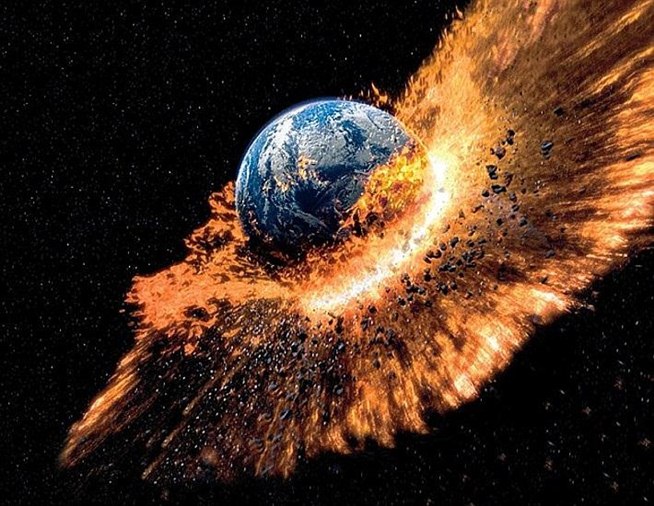
     Why is everyone freaking out about the end of the world? I'm only twenty-two and I've lived through more "end-of-the-world" scenarios than nearly any other era of history: Y2K and the electronics apocalypse of 2000, 9/11 and the terrorist attacks on the United States as well as the ensuing war, about twelve different dates for Armageddon, and now this--the end of the Mayan calendar. Is it that we have a fascination with death and destruction? Is it that we see something morally wrong with where we're all going? Or is it that it's really entertaining to propose a world-wide event and make believe that it'll happen?
     When I took a class on Fairy Tales, we discussed the stories as ways of coping with the moral dilemmas of our daily lives. The stories allowed us to live through these terrifying and traumatizing events without actually being physically harmed in the process, they were entertainment for the dark side of the human psyche. Is that what we're doing now, with these end of the world, death and destruction stories? Movies like 2012 and The Day After Tomorrow have become manifestations of our fear of the end of the world, and turning it into something that fascinates and entertains us. Decades ago, these same stories would be the Grimm versions of Cinderella, Rapunzel, Snow White, Iron John, and so many more myths and legends. They've been extended beyond the individual level--a single person's world is falling apart--to the destruction of all peoples and their worlds.
     Long, rambling, story short: these stories of Earth's destruction are the modern stories that help us deal with the problems of society and the fear of what's coming next. There is a place for such stories, but we, as everyday people, do not need to believe them in a literal sense.

Just a thought...
Stephie

PS. We're still here.

Sunday, December 2, 2012

Does it Hook You and Drag You In?

     In reading for Capstone, I came across a literary critic who, just after his mother's death, used photography and photographic theory to try and recapture his mother. that was Roland Barthes' (said "Bart") foray into photography in Camera Lucidia, which was originally written in French. The fact that it was translated helps to understand why the actual words on the page don't always make sense.
     The main things Barthes talked about were the punctum, studium, and unary photograph. When he talked about these different ideas he used the word affect to describe the emotions it made him feel. The punctum is described as a detail in a photograph that hooks into the reader and draws their attention. Studium is something that you notice, but the attention doesn't get caught on. A unary photograph is a photo that is so perfectly composed that it doesn't do anything to the attention--the observer says "hmm" and walks away--like the pictures that come in picture frames.
     My argument is that everything has this sort of element--it's not in the art itself, but in the observer's experience. The three parts are dependent on each other to exist, but without the observer there is nothing for them to relate to and create the affect that Barthes seems so stuck on. I understood affect to be the emotional meaning that creates the three responses, when you look at a wedding photo you're usually happy because weddings are happy occasions.
     It's difficult to make my argument make sense to other people because I'm not applying a photographic theory to photography, so I have to explain as well as show that what I'm saying is not only possible, but also plausible. I'm enjoying the application of my take on Barthes's theory, but no matter how interesting I find it, explaining his theory is a pain.

Just a thought....
Stephie

Saturday, November 24, 2012

Do I have ADD or is it my Generation?

     So I'm working on a giant paper that shall be the bane of my existence until it is complete, but I've noticed that lately I just can't focus for more than fifteen minutes at a time. Even when I can get those fifteen minute bursts to line up and form more than 45 minutes, there are three things I have to have on hand: 1. A cup of hot tea, 2. A clean working environment, and 3. My earbuds and music. The first two are more necessary when I want to sit down for more than twenty minutes, but the third is necessary for any work to be done. My question is: Why can't I work unless I block out the world with music?
     When my brother was little, his teacher wanted him to be checked out for ADHD (Attention-Deficit/ Hyperactivity Disorder)--he was seven and hyperactive as any seven-year-old boy is--the doctors concluded no, but a couple of the symptoms of ADD (Attention Deficit Disorder) linked with some of the behaviors that both my sister and I have been experiencing in the last couple years at college. Mainly the inability to focus for longer periods of time. Now, none of the doctors I've seen have said anything about having ADD, but I've noticed that when I can't hear the world around me, it's easier to focus. I've also noticed that I'm not the only one this works for.
     You can take a look at nearly any college library to find students listening to music while they study. This is the same group of students that can text and walk, listen to the television and hold a conversation, and play a video game while socializing with friends. Multi-tasking seems to be what we've been trained to do. I can keep track of four conversations at once, as long as I'm not actively involved in any of them, but why can't I just sit in a quiet room--even if I have my cup of tea and clean environment--and get anything done?
     There are a couple theories circulating that propose this inability to work without extraneous stimuli is a result of the multi-tasking my generation has been asked to do from such a young age. So why is my generation so different? We grew up with the computers, with the internet and all the flashing colors trying to get your attention, we have our portable music devices and our phones that all keep us going going going, and we've had them since we were little.
     I wonder about the children who are already experiencing what I've started going through in the last couple years: the lack of concentration without stimulation, what are they going to do in fifteen years when it all starts getting more pronounced? Will we have to have those sci-fi technologies where the computer display is in your head, just so the everyday person has enough background brain stimulation to focus on the foreground?
     Whatever happens, I just hope we realize that we're doing this to ourselves and our kids. Take the time to turn off all the electronics and interact with real people: they're way more stimulating and it eases the go-go-go of the brain.

Just a thought...
Stephie

Friday, November 16, 2012

Existentialism

     Nearly everyone I've talked to about existentialism has been confused about it. I'm a little confused how they can be so confused. From what I understand it's just the belief that existence is created from the choices and experiences of a person. Every person has the right to make their own decisions--this is where liberty and freedom come into it--and if a person doesn't have the freedom to make their own choices you're experiencing oppression. That's my understanding.
     Part of it though is a willingness to live with the consequences of your actions. I think that's where people get confused. We talk about how life isn't fair and how bad things happen to good people, which is true, but at the same time it's because the good people take responsibility for their actions that bad things happen to them. People I've classified as 'bad' in my life have had the tendency to let other people take the blame for their mistakes and missteps. And I've noticed that because the other people (the good people) are more willing to take the blame, even when it doesn't belong on their shoulders, the people I've always labelled 'bad' don't have to take responsibility for themselves.
     What happens when the 'good' people no longer are willing to take responsibility for someone else's actions? I like the ideas put forth by the school of Existentialism, for the most part, they make the world make sense.

Just a thought....
Stephie

Tuesday, October 23, 2012

Cussing

     My dad used to tell us kids a story about his grandmother: one of the kids would cuss in front of her and she would say "There's no such thing as a bad word, only bad intentions." I always liked the story (even if Mom and Dad didn't agree in being so laissez faire about the whole cussing thing) and remembered it when I came across an article on how cussing isn't the biggest problem in the world; God has bigger things to clean up in our lives.
     The basic premise is that Christians shouldn't cuss. But to get around cussing they create a language that is "acceptable" yet still stands in for the same thing. Then the article delves further into the concept of sinful and non-sinful language for example, a close friend gets an amazing gift for Christmas and you say "I hate you", it's joking and expressing your jealousy in a way the friend understands. But in a different situation, someone hurt your feelings and you want to return the favor so you say "I hate you" it becomes sinful--because of your intentions.
     The article goes on to talk about intentions as opposed to actions and how people who flaunt their language as a way of sounding cool aren't as cool as they think, but the writer notes there is something about using foul language that is unacceptable in and of itself. I just got to thinking about what we consider cussing and what is acceptable language, but I always come back to my great-grandma's philosophy: there are no bad words. Only bad intentions dirtying the language with which they are expressed.

Just a thought....
Stephie

Monday, October 15, 2012

Novelistic Settings

     I was getting ready to write about a book I read years ago, The Secret at Shadow Ranch. It's a Nancy Drew Mystery, short and sweet, but I just couldn't remember the plot so I decided to search the internet for it. I came up with a Wikipedia site for Shadow Ranch--it's a real place!
     I was shocked to discover this so I continued reading, only to find that the ranch in real life is in California, while in the book it's in Arizona. All interest lost. But then I got to thinking: how many places in books have existed in real life (other than what we expect to be on the map) and how to people come up with them? 
      Then I heard about a book that's become extremely popular lately: the Fifty Shades books. My friend was complaining about how they're set in Seattle yet nothing about the setting is realistic, other than the rain. Another friend chimed in that it was because it's Twilight fan fiction and the author lives in Australia. While that's all good and fine, there are so many other, good books that have a better description of Seattle than the Twilight series and so many other ways to discover more about the area than to use another fictional book. 
     I know Jayne Ann Krentz lives in the Seattle area. Her books are usually set in the Pacific Northwest and have a pretty realistic setting. While you can't go to a particular part of town and say "Oh, So-and-so lived in that building on the fourth floor" you see parts of the city that the characters walk through and live in. 
     Why is it that some authors write much more realistic settings into their books than others? The mythical realms are usually the most detailed: Narnia, Middle Earth, Alagaesia, and so many other worlds have more dimension than places that really exist. But why? Is it so much more difficult to paint a picture in your reader's mind of a place they could actually go and visit than one only you can see?

Just a thought....
Stephie

Sunday, October 14, 2012

The Wild Man

     I took a Fairy Tales & Fantasy class last year where we looked at the psychology behind some of the common fairy tales. It was a great class and I finally got to look into the history and motivations commonly thought to be behind the stories I've been hearing and reading for years. The story we looked at in the most depth was the story of the Wild Man. Now, the Wild Man is a wise man who lives in the forest. In the story he is known as Iron John, a man who lived in a pond and mentored a young prince.

A basic retelling of the story:
     Something strange is happening in the forest near the king's castle: people go in, but they don't come out, so people stop going into the forest. A mysterious hunter shows up and  asks the king if there's anything dangerous around. The king points out the forest and the hunter goes in with only his dog. When they pass a pond, something reaches out and grabs the dog. The man returns to the castle, gathers some people, and returns to empty the pond. They find Iron John, tie him up, and lock him in the castle dungeons.
     One day the prince is playing with his favorite golden ball when it rolls away and into the Wild Man's dungeon. Iron John says he'll give it back if the prince releases him, the boy runs away and returns twice more before saying he couldn't release Iron John even if he wanted to. To which the Wild Man replies, "the key is under your mother's pillow."
     The prince steals the key when his parents are away, and tries to release the Wild Man, but hurts his finger in the process. When the man is free he cries, "don't leave or they will beat me" so Iron John takes the prince up on his shoulders and they escape together. The King and Queen notice the escaped prisoner and missing prince and scour the lands for them without success.
     Iron John feels compassion for the prince, who can never return home, and sets him to the task of watching a spring, not letting anything fall into it. The boy sees golden fish and creatures moving in the pure water, and unknowingly slides his hurt finger into the pond. It turns to gold! When the Wild Man returns the prince is given two more chances to right the wrong, but he allows a single hair from his head, then the entire shock of his hair to fall into the pond. The Wild Man sends the boy out into the world to experience poverty because of his failure.
     The boy went in search of work, having no skill by which to earn his living he wandered until he found a large city. He went into the palace and asked for work, and while they didn't know what he could do, they liked him and set him to fetch and carry for the kitchen. One day the cook sent him to deliver food to the king's table, but the boy didn't want the king to see his golden hair and kept his hat on. The king found this disrespectful and ordered him fired.
     Instead of firing him, the cook took pity and traded the prince for the gardener's boy. One summer day he took off his hat and his golden hair sparkled and glowed in the sunlight. The princess saw and demanded the boy bring her flowers, when he arrived she tricked him into taking his cap off. He tried to escape, but she caught him and gave him a bag of coins. The prince handed them over to the gardener for his children. On the next day the princess tried again to see the boy's hair, but he held his cap on and she gave him another bag of coins that he handed over to the gardener. On the third day, he held onto his hat and refused the bag of coins.
     Soon a war broke out in the country. The boy decided he was man enough to go to war and declared his intention. The soldiers mocked him and left him a lame horse. The boy called at the edge of the forest three times "Iron John" and the Wild Man came. "What do you want?" the boy replied a strong war-horse. So Iron John provided a magnificent war horse and a band of iron-clad warriors. They drove back the enemy force and won the battle for the King, but rather than riding directly back to the castle, the prince returned the gifts to Iron John and rode the three-legged horse home.
     The king decided to host a festival to bring out the mysterious knight ending with the princess throwing out the golden apple. The prince went back to the forest and asked Iron John to catch the apple, the Wild Man gave him a chestnut horse and red armor to protect him. He rode onto the field and when the princess threw out the golden apple, he caught it, immediately riding away. On the second day the prince wore white armor and rode a white horse, caught the apple and rode away. The king became angry and told his men that if the mysterious knight didn't come and report his name, "chase him and give him a blow with your sword." On the third day Iron John gave the prince black armor and a black horse. He caught the apple and fled, but the King's Men followed and knocked his helmet off. They returned and told the king all.
     The princess went the next day to the gardener and asked after the boy. He replied, "he went to join the festival and got home late last night. But he showed my children three golden apples he won." She returned to her father and the king called the boy. The princess took his cap and his golden hair astounded the court, the king asked if he was the knight. The boy replied yes, revealed he was the mysterious knight from the war and that his father was a notable king, and when the king offered a reward, asked for the princess in marriage.
     When the two were celebrating their marriage feast, a baronial king burst through the doors with his attendants, hugged the young man and said, "I am Iron John, enchanted into the Wild Man, you have freed me and all my treasures are now yours!"
And they all lived happily ever after...

     There are so many things we talked about in this story, like the golden ball. The class discussion came up with the golden ball as innocence. Around eight years old, something happens that the world is no longer a happy-hunky-dory place. For some people this is sooner and for some this is later, but for the most part, something happens at eight. The time in the king's kitchen is reminiscent of the work that everyone has to do to figure out their own identity and who they want to be in the future. It continues over into the work with the gardener, only that is more of the busy work that you do until you've managed to put into action who you want to be; like a first job before you start your career. Finding the princess is, in this case, finding the inner female or the anima. I was fascinated that Iron John's spell was broken because he mentored another young man in the ways of the Wild Man, and in doing so helped him to achieve his fortune and destiny. It speaks to the idea that you're not completely done with your life's work until you've helped and led another into the beginning of their life's work. A resounding advocation of mentoring programs. I enjoyed the story, while it isn't my favorite myth or fairy tale it does show how these stories are reflections of the society and time they came out of.

Just a thought....
Stephie

Friday, September 21, 2012

Triangles

So many different types of triangles! Here's a couple:

     Isosceles triangles have two sides that are the same length, the third is a different length. They also have two congruent (I love using math terms from middle school) angles that are opposite each other and adjacent along the third side.

     There's the Equilateral or Equal-angular triangle that has sides of the same length and with the same angles. They're not really as interesting as some triangles.

     There's the triangle that has sides of all different lengths and angles of all different measures. The sum of all the angles must be 360 degrees, something about the sum of the angles creating a circle. No one angle can measure 180 or more, something about a straight line can't be an angle...

     Then there's a love triangle. They're the BEST! (note the sarcasm) One of my friends recently stopped waiting for the guy she'd assumed was her 'one and only' prince charming to date a guy she'd just met. A normal occurrence in college, right? Apparently the former prince charming didn't see it that way and is trying to convince her to drop the new guy and commit to him, without a commitment on his side. While the new beau wants to give her the world, and commit to whatever she wants. I understand relationships are hard, but add in another variable to the two-point line just makes everything more complicated.

Sometimes triangles are fantastic, other times they're not the right situation.
Just a thought....
Stephie

Thursday, September 20, 2012

Bucket List

     A couple years ago, more like five, The Bucket List came out. For me it was a life-changing movie; the idea of making a list of things I wanted to accomplish in my life was completely new (I was also seventeen years old). Since then I've made many different "Bucket Lists" but I haven't been so good at the checking-off part. I finally went through all the paper and put the different lists on my computer.... it was a long document. But I decided that I wouldn't delete things as I checked them off--only put a line through them. That way I wouldn't put them on the list again. It still hasn't helped me with checking things off my list. And the list just keeps on growing, despite how often I "check" things off.

     Here are some of the things I've got left:

  1. Learn French
  2. Run a Marathon
  3. Visit Graceland
  4. Read the classics for fun
  5. Buy a house
  6. Tailgate at the Superbowl
  7. Ride the elevator up the Eiffel Tower
  8. Go to the Olympic Games
  9. Ride the Orient Express
  10. Meet James Garner
and there were so many more. I crossed off a good number of them in my first years of college, but I've still got more to go, and I keep adding more, like I said. It's crazy how much I want to do with my life and how much I probably won't ever accomplish from that list (I had "Meet Andy Griffiths" on it, but then he died). It's wonderful to have something to strive for.

Just a thought....
Stephie

Friday, September 14, 2012

Lights, Popcorn, Action!

     I recently saw the new Avengers movie--LOVED IT! It was a great blend of the hilarity I've expected from Joss Wheedon since Firefly, and the action adventure that comes with creating a movie based on comic books. I'm not much of a comic book aficionado, but I did have some of the back story from the earlier movies. My next question is: Will they make a movie for the Black Widow and Hawkeye?
     The combination of various directors' vision to create the one movie was really interesting to watch, at least for me. The producers and Wheedon did a wonderful job of staying true to the characters that were portrayed in other movies (I really liked the cameos of Black Widow and Hawkeye in Iron Man and Thor).
     I just wish that Hollywood would take such care with other movies and follow the standard they've already created in this grouping of movies. I'm looking forward to watching The Dark Knight Rises.

Just a thought....
Stephie

Wednesday, September 12, 2012

Capstone Begins!

     I started taking my capstone class, the one that's supposed to be a culmination of all my work in college, and it is fantastic! I absolutely love who I'll be working with and our professor/mentor is supportive and cares about both the product and the experience. We'll be looking at "Words + Image = Picture" as our theme and I got really excited to work with movies and children's adaptations and all sorts of combinations of literal images juxtaposed against words and the images created through text.
     The first thing I thought of was "It's like when they picked Daniel Radcliffe to be Harry Potter!" Now, I do like Daniel Radcliffe as HP, but he isn't what I pictured when I read the first book in my head. I don't remember anymore what I imagined him to look like, but it certainly wasn't like in the movie. Similar things have happened with other stories I've seen turned into movies: Eragon, the Lord of the Rings series, Journey to the Center of the Earth, and Around the World in Eighty Days, just to name a few.
     Now we've received the syllabus and had a chance to look through the books. There are books about photography, there are short essays, there are long essays, there are works about works about pain, there are photographs, there are novels: the scope of the writing is amazing and I am so excited to take the class and start working on my final project that I don't know what to do with myself.
     We started work right on Day 1, collecting work from throughout our lives and condensing it into a single portfolio that will be the "Portrait of a English Major". From this work we will develop our personal statements to be read when we present our final papers--the climax of each student's work in the English Department. So far my portfolio was 99 pages long, and I still can add to it (for which I am grateful, I'm taking a couple classes I want to add into the mix).
     I am nervous that I'll get too wrapped up in the fun of this work and lose track of my other classes, or that I'll swamp myself with more than I can chew. But this is what life is about: taking the chances and making mistakes while there's someone who can pick me up and say "Might want to try that another way." I go to Day 3 in the morning and have my first conference with my professor after class. I'm excited, nervous, and ready to get rolling on this project.

Just a thought....
Stephie

Friday, August 3, 2012

Glasses...

     Lately I've been getting headaches when I read (not fun for someone who loves their books as much as I do), so I decided to make an appointment with the eye doctor. It went well; they've decided that I've got good vision, the only problem is that my eyes work too well together.
     A normal person's eyes sit angled slightly away from each other when they gaze into the distance. Mine don't, they angle slightly toward each other. That'd be okay, but when things get closer your eyes point closer together to meet in the middle on the object. To compensate the lens within the eye tightens or loosens up to focus on the object. Where I start having trouble is that the lens in my eye wants to focus at the same rate as everyone else's eye (over-focusing) while turning in further. This causes eye strain and then headaches the longer I read.
     To help out with this, I have to wear glasses. The glasses help the lenses in my eyes relax to focus at the same point as someone who doesn't have the same "over-cooperation" problem my eyes have. The optometrist explained that the +1.00 on glasses means they force the lens to relax, and the -1.00 makes the eye tighten and focus. I've been wearing reading glasses for about a year now, much shorter than my best friend's fifteen years or my mom's thirty-some years, but now I get to wear them any time I'm reading or focusing on little things, or really anything up close.
     So far, it's helping. I've been on the computer for a couple hours and before that I read my book and I still haven't gotten a headache, whereas without the glasses I'd have a full-fledged, nap-requiring headache. I'm just a little wary about having to carry them around with me and worry about scratching the lenses. Oh, well... I'll figure it out eventually.

Just a thought....
Stephie

Friday, May 25, 2012

Imagination

     It's amazing to see how pop culture can take literary references and make them popular once more. I was watching Doctor Who this afternoon and Charles Dickens featured. Some of the greatest minds of all time re-imagined by our standards--Dickens starts out as a close-minded fool but learns to accept that the world is not as it has always seemed. The implication is that it wasn't until after he opened his mind to the possibility of angels and aliens and more that his writing took off.
     What does that mean for us? Sheldon, or probably Leonard, makes a comment about how science is focused on facts. We live in such a science focused world that we don't take into account the mysteries of the supernatural or just the unknown. And the people who do are considered crazy. Why can't we understand science and still allow our imaginations to explore the unknown? We've started to allow our minds to explore with shows like "Life After People," "Mega-Disasters," shows like "The Tudors," "Merlin," and even "Doctor Who," but they're mainly based in what we already know, or in myths from centuries ago.
     What happened to humanity's imagination? Will we ever be able to let our imaginations run lose, or will we be trapped between our nightmares and science forever? Shakespeare wrote: There are more things of heaven and earth than are dreamt of in your philosophy. I hope we learn to accept that there will forever be things people don't understand, and things we don't need to understand.

Just a thought...
Stephie