Showing posts with label history. Show all posts

Tuesday, May 13, 2014

A Drop of Time

     The idea that we're alone in the universe is either arrogant or ignorant, in my opinion. It's such a huge universe--why shouldn't life exist elsewhere? If we believe that humans on Earth are the only form of life (ignoring the idea of sentient life for a second) it's saying the miracle that put us in just the right place with just the right nutrients couldn't possibly happen in this great big universe of ours. Next, even if there is life, thinking that it couldn't have become sentient is completely ignoring the fact that we don't even know what makes us sentient. If it's so mysterious who's to say it won't happen again somewhere else, far away from us?
     Okay, so sentient life is a possibility, but not life that's able to evolve to the point of space travel. We did it. Why shouldn't some race that's been around longer than we have be able to travel the universe? Isn't the hope that we will be able to travel the universe, someone else has probably had the same desire and achieved their goal.
     I recently had a conversation about the possibility of life in the universe and there's a theory that says (and I'm paraphrasing because I don't remember exactly how it was described) humans are a single blip in the amazingly expansive measure of the universe so we're either not the only ones out there or we're destined to destroy ourselves before we actually make an impact on the greater environment.
     And, as depressing as that sounds, in the grand scheme of things it's true. But when we're living day to day each second seems like so much more than the minuscule drop of history that it is.

Just a thought...
Stephie

Thursday, March 27, 2014

History Day

     When I was in high school I participated in a program called National History Day. It's a pretty cool idea to get kids involved in history and thinking about the events that changed the world--though they definitely don't realize they're doing it. At least, I didn't realize that I was learning about world-changing events and their consequences.
     This year the theme was Rights and Responsibilities and the projects were all good choices. Where I became more and more frustrated over the course of the day was in their inability to string words into complete sentences. Now, I understand that twelve to fifteen-year-olds won't have the same confidence with language that I do after sixteen years of education, but they can at least build a sentence that makes its point without throwing me into a maelstrom of confusion at the mere sight of it.
     I was actually proud to see the projects and see how everything has changed because of the technology available. When we completed our exhibit (I was in a group with two other young ladies) we had to go to the library for primary sources or ask the librarian for help finding and having them sent to us. Now there are so many archives online students can find and access without too much stress that they have more informed presentations and they are more connected to not only their history but also current events.
     The competition is good for the students if they 're hoping to move forward to college and, in my experience, gives them something to strive for academically. The experience is similar to what I experienced working on projects in college--not only do you need to understand research methods, but you must know how to convey your argument clearly and concisely.
     I enjoy working with the program and my greatest frustrations rise when students don't give their best efforts then hope to convince me, as a judge, that it is their top work. Sorry kiddos, been there, done that, I still have the paper somewhere. It's a good program and deserves recognition for introducing young teens to the process and rigor of academic research.

Tuesday, October 29, 2013

Samhain

     A few years ago a friend asked why I'm so okay with all the "devil worship" of Halloween. I was really confused what she was talking about so had her explain. She was taking the Christian perspective of the holiday while I had already integrated my Celtic background into my Christian faith. Somewhere along the line All Hallow's Eve became a day to be feared because the dead were walking the earth.
     Halloween started out as the precursor to All Saint's Day, November 1st, when all the souls of the dead from the year wandered the earth in hopes of finding rest. Then, on All Saints Day they would travel to the next realm, whether that was the realm of the good (heaven) or evil (hell). We wear masks so that the evil spirits cannot recognize our human souls and therefore take us with them or manipulate our souls after they've gone on.
     Samhain itself is about the transition from summer into winter. It is the time when livestock is brought back from summer pastures and people prepare for the winter. It is one of four holidays in the Celtic calendar, resting almost halfway between the Autumn Equinox and the Winter Solstice. During the festival bonfires are lit as protective measures against spirits and fairies, but the souls of lost loved ones are welcomed to eat at the table with the living. Samhain pre-dates Christianity, and when the Christian All Saint's Day was moved to November 1st the two began to meld and became something like modern Halloween.
   The holiday is called by many different names and celebrated with different practices
, but most have some connection to the rebirth and celebration. It isn't about terrifying children, or about demons wandering the planet; it's about remembering the people we've lost and indulging in the "what if".

Monday, July 8, 2013

MASH

     I started reading like crazy this summer, to make up for all that time I spent on required readings, and in looking for something interesting found M.A.S.H: A Novel About Three Army Doctors. This was exciting for me because I've been watching the television show since I was a kid. It was fascinating to see the transition of the story: the movie, and television show, were based on this book. I hadn't noticed when I saw the movie or in watching the show--I guess they didn't credit the author unless he or she was associated with the screen production too--so I was surprised when all three of the renditions were similar.
     The show follows Franklin "Hawkeye" Pierce, a Captain in the US Army stationed at a Mobile Army Surgical Hospital situated near the front lines. He lives in "The Swamp" with a rotation of four other officers and makes it through the Korean War by drinking and flirting outrageously with any and all women he comes across. Yet, he is still one of the best doctors in Asian campaign, with an honest care for the well-being of the people around him. Hawkeye and his friends' hi-jinks illustrate the futility of war while still showing their humanity: their pranks and shows of temper are how they maintain dignity in the midst of one of the most brutal situations man faces.
     The movie is a precursor to the television show and based on the novel. A dark comedy about the same characters and problems as in the novel and television show. The 4077 MASH calls in two replacement doctors and gets Hawkeye and Captain "Duke" Forrest. The two encounter their new tent-mate, Major Frank Burns, who is extremely religious and an inferior surgeon to Hawkeye and Duke. A new surgeon arrives, "Trapper" John, whom Hawkeye knew in college. Hi-jinks ensue and Burns is sent stateside. Meanwhile, the unit's dentist confesses to the chaplain that he is considering suicide. He comes to the Swampmen (for they again live in a tent named "The Swamp") for a quick and easy way to finish it. The three men suggest a "black-pill" quick acting poison and prepare a Last Supper-like going away party for the dentist. The black-pill is a sleeping pill and the dentist's confidence is renewed when he spends the night with one of the nurses, negating his worry of inability to perform. The movie then includes Trapper and Hawkeye's journey to Japan to save a congressman's son. Through blackmail and political implication they escape court-martial and run into a friend of Hawkeye's from college. The story ends with a football game between the 4077th and 325th MASH units. Both sides have ringers and the 4077th manages to win through a combination of cheating and trickery. Soon afterward Hawkeye and Duke are discharged and sent home.
     The book is much like both the movie and the television series. Character outlines vary and some characters are combined to create those who appear in both the movie and television show. I found the personifications between the book and shows enlightening. Alan Alda as Hawkeye in the show has always struck me as the perfect character, but in reading the book I realize how much the two are intertwined. Donald Sutherland as Hawkeye in the movie is a good imagining, but he doesn't have as much of the carefree rake in his personification as Alda's Hawkeye does. Yet the Hawkeye of the book isn't quite as much of a womanizer as in the television show. The relationships between characters, though, are spot-on. How they interact and react to each other, in both the show and movie, mirrors a relationship in the book that creates the community the characters can exist within.
     Despite the differences in characterizations between mediums, the MASH characters are powerful examples of humanity in times of trouble and chaos. I enjoyed all three tellings of Richard Hooker's story. What if all franchises had this similarity threading through them?

Just a thought....
Stephie

Friday, December 21, 2012

End of the World

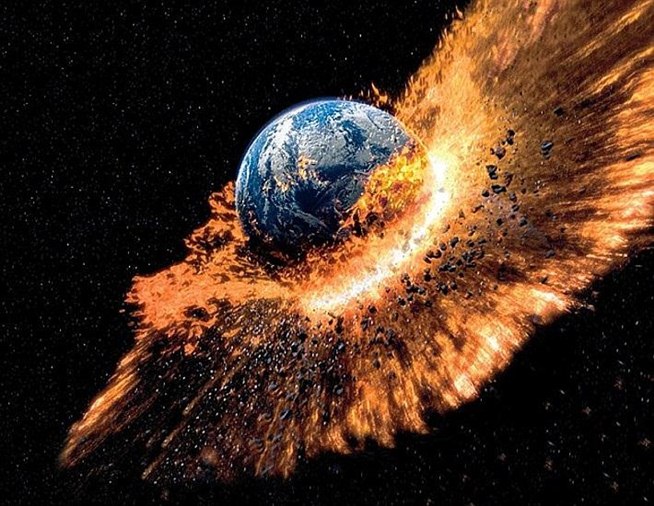
     Why is everyone freaking out about the end of the world? I'm only twenty-two and I've lived through more "end-of-the-world" scenarios than nearly any other era of history: Y2K and the electronics apocalypse of 2000, 9/11 and the terrorist attacks on the United States as well as the ensuing war, about twelve different dates for Armageddon, and now this--the end of the Mayan calendar. Is it that we have a fascination with death and destruction? Is it that we see something morally wrong with where we're all going? Or is it that it's really entertaining to propose a world-wide event and make believe that it'll happen?
     When I took a class on Fairy Tales, we discussed the stories as ways of coping with the moral dilemmas of our daily lives. The stories allowed us to live through these terrifying and traumatizing events without actually being physically harmed in the process, they were entertainment for the dark side of the human psyche. Is that what we're doing now, with these end of the world, death and destruction stories? Movies like 2012 and The Day After Tomorrow have become manifestations of our fear of the end of the world, and turning it into something that fascinates and entertains us. Decades ago, these same stories would be the Grimm versions of Cinderella, Rapunzel, Snow White, Iron John, and so many more myths and legends. They've been extended beyond the individual level--a single person's world is falling apart--to the destruction of all peoples and their worlds.
     Long, rambling, story short: these stories of Earth's destruction are the modern stories that help us deal with the problems of society and the fear of what's coming next. There is a place for such stories, but we, as everyday people, do not need to believe them in a literal sense.

Just a thought...
Stephie

PS. We're still here.

Tuesday, December 18, 2012

School Shooting--Make Your Own Decisions

     This past Friday, there was a terrible tragedy at Sandy Hook Elementary School in Newtown, Connecticut: a classroom of kindergarteners and fourth graders, as well as some of the professionals at the school were killed. Now everyone is taking stances on the American Constitution's second Amendment--the right to bear arms. We seem to think because there is gun violence and people are going to abuse their right to protect themselves that taking away the ability for the average person to have a weapon is going to stop the people breaking laws.
     Here's my question: If people are going to use guns in the process of breaking the law, what makes our society think that the illegality of possessing a gun will stop gun violence and the breaking of law? If someone is going to break the law, making gun ownership illegal is not going to stop them. For example: one of the main arguments for why pot (marijuana) should be legal is that people are not going to stop using it.
     Yes, what happened Friday in Connecticut was a tragedy, twenty-some people lost their lives, parents lost their innocent children, and there will be a generation of children terrified and traumatized because of this experience. But, as sad as it is, this happens every day around the world: that same day 22 children and an elderly woman were stabbed in China outside an elementary school; July 20th of this year 12 people were killed and an additional 58 were injured when a gunman released teargas in a crowded theater release of the new Batman movie, then fired shots into the audience; a man near Newport Beach, California opened fire at a mall both Saturday and in a similar instance November 16th; and December 11th a man opened fire at the Clackamas Town Center mall near Portland, Oregon killing two people and severely injuring another.
     We live in our own little worlds, ignoring all the unpleasant things in our society until the media brings them to our attention. The local news may pick up on more of the tragedies that effect us directly, but this "head-in-the-sand" method of dealing with the dangers of life in a world where people don't respect each other is what will get us into real trouble. Be aware, not only of the 'crazies' that are out there killing people, but the people who are doing good in the world. Be aware of where you are and what you're doing. Be aware that the greatest dangers are of letting someone else make up your mind for you.

Just a thought....
Stephie

Friday, November 16, 2012

Existentialism

     Nearly everyone I've talked to about existentialism has been confused about it. I'm a little confused how they can be so confused. From what I understand it's just the belief that existence is created from the choices and experiences of a person. Every person has the right to make their own decisions--this is where liberty and freedom come into it--and if a person doesn't have the freedom to make their own choices you're experiencing oppression. That's my understanding.
     Part of it though is a willingness to live with the consequences of your actions. I think that's where people get confused. We talk about how life isn't fair and how bad things happen to good people, which is true, but at the same time it's because the good people take responsibility for their actions that bad things happen to them. People I've classified as 'bad' in my life have had the tendency to let other people take the blame for their mistakes and missteps. And I've noticed that because the other people (the good people) are more willing to take the blame, even when it doesn't belong on their shoulders, the people I've always labelled 'bad' don't have to take responsibility for themselves.
     What happens when the 'good' people no longer are willing to take responsibility for someone else's actions? I like the ideas put forth by the school of Existentialism, for the most part, they make the world make sense.

Just a thought....
Stephie

Saturday, September 15, 2012

Inheriting Music

     I was listening to the introductory music of Copper, the new television show on BBC America, and something about it spoke to me. It sounds like a mixture of bagpipes and a fiddle, in the Irish style. It's a beautiful tune, and I wish I knew why it speaks to me.
     Is there something about the music someone's ancestors listened to that can speak to them? My parents haven't ever really listened to Celtic music, but I've discovered that I enjoy it just as much as the pop and country and classic rock I find on the radio. Maybe I should mention that my family is most significantly Irish, there is English and Scottish mixed in, but is definitely Irish.
     There's something to be learned from the diets of families--over years of not eating grain, people lose the ability to digest gluten and their descendants become gluten-intolerant or allergic. I wonder if the same happens with music. Over generations of listening to the same music, does a family develop a preference for it?

Just a thought....
Stephie

Tuesday, September 11, 2012

Patriot Day

     Today was an interesting day: eleven years ago four air planes were hijacked in flight and used as weapons in an attack on the United States. Now, I know that most of what I truly know about 9/11 is filtered through a childhood lens and what I've since been told by the media and my parents, but I did live through one of the most traumatic events of the last thirty years.
     Everyone says you remember where you are when it happens. It's true: I had just turned eleven years old,  my sister and brother and I were at daycare while my dad was at work and my mom was in Turkey on a trip for work. We were just getting to the "big kid center" when our supervisor/teacher got a call. It was the daycare's main base--where the younger kids stayed while the school-aged kids waited for time to leave--telling her to check the news. She turned on the television and the image of the smoking towers was everywhere.
     We stood in shock: what happened? What did that mean for a bunch of kids living three thousand miles away? What was going to happen next? It was a bigger question for my sister and me; what would happen to us? Both of our parents were in the military and any attack on the United States meant they could be sent anywhere around the world. The most difficult part for us was that neither of our parents could be reached... All military bases were on lockdown--nothing goes in or out (people, equipment, non-military communication)--and even they couldn't get a hold of some places overseas.
     It turned out that my dad wouldn't be going anywhere (he had three children at home and his wife was overseas) but my mom wouldn't be coming home either. Mom ended up coming home several weeks later than expected, and no one knew how long anyone was going to stay. My siblings and I ended up going to school as normal, going home, and staying with an aunt while Dad worked.
     We later learned that there were more than just the two planes we'd seen on the television: one landed in the Pentagon wiping out thousands of lives, and another was commandeered by the passengers, who diverted the plane from its destination in the White House to a field in Pennsylvania. Those passengers are now considered national heroes and are remembered for the lives they saved.
     It's sort of terrifying to think that all of those events, events that have driven our country into a decade-long military conflict and caused a significant change in how we live our daily lives, were so long ago. I am now twenty-two and have spent half my life living in a world where the people are scared to death of anyone different. If the attack on the United States hadn't happened, would we have moved beyond caring about what a person looked like or where their ancestors lived? Or would we still ignore the actions of truly amazing people just because they look or speak or come from somewhere different than us?

Just a thought....
Stephie

Thursday, August 9, 2012

Lucretia Borgia

     Long ago, in a far away land called Italy there lived a countess. Lucretia Borgia was a countess best known for poisoning the people around her.
     Her family was from Spain, and contained Popes, a saint, and the model for Machiavelli's Prince. Lucretia was the illegitimate daughter of a Pope. She was well-educated and twice-engaged by the time she was eleven. She eventually married an illegitimate prince in a massive ceremony.
     After a few years the family no longer supported Giovanni (her husband) and forced an annulment. She next married Alfonso of Aragon who is attacked and killed a few years later. Lucretia is devastated and marries for a third time to Alfonso of Ferrara, her final husband. They manage to make a partnership of it and she becomes more respectable.
     When her family fell from grace, Lucretia survived the scandal and became even more respected. All around her, people were falling like flies, but Lucretia made it through everything safely. While she is supposed to be the heartless murderer, it is her brother and father who poisoned the men around Lucretia.
     But why does everyone remember Lucretia Borgia as an evil poisoner? I hadn't ever heard of her brother or father until I decided to look further into her life, instead I'd heard that she was a princess of an Italian principality and a black widow. I recently learned from my brother that she's featured in the Assassin's Creed video game (and follows the stereotype of femme fatale). Where did all the mystery come from? and why doesn't someone debunk the perception?

Just a thought....
Stephie

Thursday, July 5, 2012

Columbia, California

     So I was off roaming around the country this last week and visited some family in Central California. It was great; there was a wedding, we went to see Magic Mike and Brave (two great movies for two completely different audiences), and we did the touristy thing and visited Columbia.
     Columbia is this great old-time mining town that has been preserved as a California State Historical Park. There are all sorts of things to do, including mining for gold, riding the stagecoach, making your own candles, watching the blacksmith at his craft, and watching the Nelson's Columbia Candy Kitchen make their homemade candies. We've been going as a family for years and still love to walk around and see the sights. My favorites are the Candle Courtyard and the candy shop. 
     At the Courtyard you can buy candles that have a basic shape, and dip them in hot wax to add color and your own unique spin on the candle. They have the traditional taper-shape and other shapes, like roses. It's great fun for kids, though you'll want to be careful with the wax . 
     Nelson's has a great selection of old-time candies: chocolate dipped honeycomb, fudge, divinity, hard candies in all sorts of flavors, jellies, lollipops, gummy candies, and even sugar free selections. Most candies are made in the shop, but there are a few that come from elsewhere. 
     There are other saloons and shops as well as street vendors. This last trip there was a cart selling old-fashioned root beer floats and lemonade and another with popcorn and other goodies. There's Brown's Coffee House & Sweets Saloon, the City Hotel, Kate's Teahouse, Columbia Booksellers & Stationers, and many other shops and eateries. 
     My favorite part of the town is that it started out as an actual mining town and has been restored. There are mini-museums throughout the town as well as a bowling alley from the 1800s and citizens dressed in era clothing. All the while, the town has grown up around its historical center and incorporated the park into the life of the town. 
     Columbia is a great place to visit for a touch of the California Gold Rush, but by no means the only attraction to the area. Nearby are Sonora, Jamestown, Angels Camp, and Murphy, California. Each have their own touch of history including Jamestown's Railtown 1897 State Historical Park. Stop by and enjoy what Tuolumne County has to offer. 

Just a thought...
Stephie