Showing posts with label imagination. Show all posts

Sunday, December 24, 2017

Holiday Traditions - The Cinnamon Bear

     In 1937 radio was the entertainment method of the day. Transco (a radio transcription company out of California) developed a fantastic story of two children who are sent to find Christmas decorations and find themselves in a land of make-believe to air in the Portland, Oregon market area. "The Cinnamon Bear" is designed to be listed to six days a week in the weeks between Thanksgiving and Christmas. 
      After several years financial difficulties prevented Transco from releasing new transcriptions of the series, though some stations played previously released transcriptions. In the 1950s the program was picked back up and has been aired in Portland and Eugene, Oregon, as well as the Chicago, Illinois, area. 
     Through the broadcast, twins Judy and Jimmy are sent to the attic in search of the family's silver star for the top of the Christmas tree. There they meet the Cinnamon Bear Paddy O'Cinnamon and travel into Maybeland chasing after the Crazy Quilt Dragon who has stolen their star. Along the way, Judy, Jimmy, and Paddy O'Cinnamon are captured by Ruthless Ink Blotters, befriended by Pirates, encounter a Giant, threatened by a Witch, helped by the Queen of Maybeland, foiled by creatures great and small, and they meet Santa Claus. But will the twins make it home with their Silver Christmas Star?

     I grew up listening to the Cinnamon Bear broadcast each year on the radio. The show is short and sweet with twists and turns as the children chase their star across Maybeland. They're interrupted and helped in turns as they adventure back to the attic and family tree waiting for the Silver Star. "The Cinnamon Bear" has inspired a cult-like following of people whose lives have been touched by the story. 

Saturday, April 11, 2015

Firefly

     In 2006 Fox Broadcasting ran a series about cowboys in outer space. Joss Whedon produced it and they called it Firefly. The story follows Mal, Captain Malcolm Reynolds of the ship Serenity, class firefly, and he and his crew sail the skies from planet to planet conducting both legitimate business transactions and smuggling to survive.
     Mal and Zoe were the last of the Independents to surrender to the Alliance--two weeks after the high command. This fierce loyalty to his beliefs is apparent in how Mal runs his ship and crew. Mal's second-in-command, Zoe, has been with him since the war against the Alliance. The Alliance fought the Independence to bring all of the star cluster humanity has colonized and to give the border planets civilization. The Independents were pushed either to join the ranks of the Alliance or to move outward to the edges of the known universe.
     Zoe is married to the ship's pilot: Hoban "Wash" Washborne, a crazy driver who knows his wife can kick his ass but loves her even more for it. Sometimes it feels as if Wash is jealous of Mal and Zoe's relationship, but his wife is so in love with him he can't help but realize it.
     The engineer is Kaylee Frye. She has a childlike enjoyment of life and, though she hasn't had any formal training, keeps Serenity flying in one piece. Kaylee genuinely loves everyone on Serenity: the crew is her family. She even has a crush on Simon, the doctor.
     Simon Tam is a brigand who started his privileged life as a top surgeon. He gave all that up to steal his sister away from the Alliance and the two are hiding from the authorities on Serenity. Simon seems somewhat socially awkward, makes a mess of any relationship with Kaylee and doesn't understand the reasons behind some of the things the crew does.
     River Tam is her brother's focus--when her brilliant mind is attacked and the Hands of Blue try to piece her apart Simon steals her away. But something happened in the Alliance center and River is a killing machine--one sometimes even she can't control. River's mind functions on a level of logic that cannot always incorporate intangible things like faith.
     The dichotomy of River's inability to understand and have a spiritual faith yet trust completely in ber brother is pitted against the Shepherd's religious faith and utter lack of trust in human nature. Shepherd Book begins as a moral compass for the crew, yet as they journey together the blending of pasts and beliefs is managed by Inara, or courtesan who rents a berth on Mal's ship, and challenged by Jayne Cobb, a mercenary who can be trusted to only fight for "number one".
     They are a motley crew, but the adventures on Serenity depend on each piece of the puzzle: without Inara they would be barbarians, without Kaylee cynical beyond reason, without Zoe flighty and prone to ridiculosity, Wash gets them in the air and Mal keeps them there; without the Shepherd they would give up hope, without Simon and River they would have continued in their same path, and Jayne is along for the ride.

Tuesday, May 13, 2014

A Drop of Time

     The idea that we're alone in the universe is either arrogant or ignorant, in my opinion. It's such a huge universe--why shouldn't life exist elsewhere? If we believe that humans on Earth are the only form of life (ignoring the idea of sentient life for a second) it's saying the miracle that put us in just the right place with just the right nutrients couldn't possibly happen in this great big universe of ours. Next, even if there is life, thinking that it couldn't have become sentient is completely ignoring the fact that we don't even know what makes us sentient. If it's so mysterious who's to say it won't happen again somewhere else, far away from us?
     Okay, so sentient life is a possibility, but not life that's able to evolve to the point of space travel. We did it. Why shouldn't some race that's been around longer than we have be able to travel the universe? Isn't the hope that we will be able to travel the universe, someone else has probably had the same desire and achieved their goal.
     I recently had a conversation about the possibility of life in the universe and there's a theory that says (and I'm paraphrasing because I don't remember exactly how it was described) humans are a single blip in the amazingly expansive measure of the universe so we're either not the only ones out there or we're destined to destroy ourselves before we actually make an impact on the greater environment.
     And, as depressing as that sounds, in the grand scheme of things it's true. But when we're living day to day each second seems like so much more than the minuscule drop of history that it is.

Just a thought...
Stephie

Saturday, January 25, 2014

Ancient Aliens

     I absolutely love listening to people talk about the "what-if". I got hooked on the History Channel show Ancient Aliens and it now feeds my hypothetical frenzy. There is also the one speaker (Giorgio A. Tsoukalos) and his crazy hair that makes me laugh because he's so passionate about his subject and doesn't notice his unruly hairdo. He's probably my favorite character to listen to on the show.
     I think it's funny how Ancient Aliens looks into the mysteries that abound throughout history and draw conclusions that point toward not only the existence of aliens but their interference as well. Images that could be anything from misshapen clouds to glow sticks become batteries and electric light bulbs, cogs and joints become technology beyond comprehension, gods and mythical creatures become alien life forms: things we would brush off as something someone ahead of the time created become things humans couldn't have developed without assistance.
     While I won't discount the possibility of advanced life forms interfering with our development, I think when people believe these developments came from elsewhere we're discounting the ingenuity and creativity of the human race. Who is to say we couldn't develop these magical inventions? Even if the ancients had alien assistance, more modern times have created those things we compare the mysterious images to.
     Ancient Aliens is a fun show and I enjoy it because it poses some entertaining theories to the questions in our world and, despite sometimes depressing me with their portrayal of the human race's potential for creativity, I come away from each episode considering how we got to where we are and what would have changed had one thing gone awry in the path.

Just a thought...
Stephie

Thursday, January 9, 2014

It's All in Your Mind....

     I have never really been into scary movies. I like to think that it's because my imagination can take a harmless scene and morph it into something horrifyingly morbid--like flying dreams where you just can't land and suffocate when you float away from Earth into outer space... For most kids the dream about flying would be fun.
Photo by: Riccardo Cuppini
     Sometimes real-life situations are creepy enough to inspire horror movie scenes without my imagination going overboard. Like when I was about twelve and watched a Stephen King movie about dead pets coming to life. I don't remember the ending, I just remember being terrified when I saw my cat's glowing green eyes at the level of my window that night.
     Other times it's simply the feeling that there's something just beyond my field of vision and if I don't watch out for it something unspeakable is going to happen. Like that feeling of being home alone when the electricity goes out. That dead silence is one of the most frightening sounds I've ever experienced, not because there's no television or internet or anything to keep me entertained, but because it can mean freezing to death or having no ability to make people aware of dangers. I still wake up when the power goes out in the middle of the night.
     I was reading somewhere that people who experience chronic pain say the anticipation of pain is actually more painful than pain itself. I feel like the unknown is like that: more terrifying by the imagination's anticipation of everything that could happen. That loud crashing sound could be someone slamming a door, or it could be someone breaking into the neighbor's house; chances are it's just the janitor at the school throwing trash in the dumpster.
     So why do hundreds of people every day watch movies that make them experience the fear I feel when walking in a dark parking garage or down a dark street? Maybe it's the thrill of surviving that unknown. For me, it's enough to just read a scene from a book or watch Supernatural, I let my imagination fill in the rest...

Just a thought...
Stephie

Thursday, November 14, 2013

Books to Movies and Back Again: Harry Potter

     I've always been a book kind of person reading the story and imagining what characters look like and what their settings are supposed to be before I go and watch the movie and have that image destroyed by someone else's picture. I never thought it was a huge deal, until the Harry Potter franchise. Now, I'm from that generation that grew up while all the Hogwarts kids were growing up, when I was eleven I read the first book, when I was twelve I read the second, etc. until the final book came out when I was seventeen.
     The movies didn't start coming out until I was about thirteen (a couple years after they were filmed) and by then I'd formed my own image of what Harry should look like. Daniel Radcliffe, as much as he is what J.K. Rowling and the producers might have imagined and wanted him to look like, was not my choice for Harry. I don't know of any actor of this generation that would have made a good Harry for what I first imagined him to be. But that's because I don't remember what I imagined him to look like.
     When the movie posters and trailers came out they were everywhere; Harry Potter was one of the biggest series and stood to make a lot of money. But what that did for my imagination was take the kid I'd created and replaced him with this real person that didn't exactly fit how I interpreted the book. Looking back at it, I'm annoyed. But I enjoyed the movies and I enjoyed the books, for different reasons.
     The books were heavier on the relationships and what it means to grow up in a world you never knew existed. They dealt with Peeves and his antics, yet he was an accepted part of Hogwarts--everyone has a place where they can belong and feel at home--in fact the story wouldn't be the same without the prankster ghost. The books dealt with Harry's insecurities and he had more alone time to delve into his own thoughts.
     The films were more action-oriented and focused more on the savior aspect. Harry was no longer just a kid growing up and dealing with his demons; he became the boy who would save the wizarding world from Voldemort. Harry wasn't allowed to have as many weaknesses, or to work through them. Yet the movies are still great stories (I'm still a little peeved that the origin of the Marauder's Map didn't make it into the third movie).
     In general I become frustrated when movies are made out of books, yet I understand the mentality behind it. I have always enjoyed Jane Austen, and the movies of her stories have both made the books more accessible and visible. But, to me, her stories seem less dependent on the details than the interactions--Elizabeth Bennett doesn't have to wear Regency attire to be judgemental of Darcy when she first meets him, the Lizzie Bennet Diaries proved that. But when movies leave out important details, like why the Potters chose Peter Pettigrew to be their secret keeper rather than Sirius and the connection between the four friends, they leave out important parts that make the story so remarkable. The Potters weren't betrayed because the information was beaten out of someone, it was given over freely and Sirius was betrayed as much as anyone else after suggesting it. These details color the entire story and take some of the magic when they're glossed over.
     Some movies based on books are great, others not so much. And while I enjoy both the movies and books in the Harry Potter franchise, I will always hold the books more dear for the magic they were in my life.

Just a thought...
Stephie

Wednesday, August 28, 2013

Time Gets Away Sometimes...

     Wow, it's been a long time since I last posted! Life gets away when there isn't anything to differentiate the days. I used to think this was just something that happened in the summer, forgetting what day it was and what the date is. After this year I realize my forgetfulness is simply the monotony of unchanging days, and the fact that I don't have a teacher reminding me what day it is.
     I understand what the "time is a matter of perception" theories are about now: What differentiates Monday from Tuesday? Answer: Nothing. Monday and Tuesday are just things that help us tell stories about the past or future, neither of which actually exists at this point in time, other than on a calendar. There is only the present and marking time is how we communicate stories to other people, even stories as simple as "Today I went to work." I'm sure I could get into this more in-depth, but I'm not sure I understand it enough to try and confuse the rest of the world.
     My point is that without something special to hold the marker of time, the present blends into itself and Tuesday feels like Friday which feels like yesterday. Well, whatever day it really is, have a great day!

Just a thought...
Stephie

Tuesday, July 23, 2013

A Dumping Ground for Whims?

     I'm in a reflective mood today, and there's something intriguing about being on the internet and knowing that there is so much information out there about me. Part of that is the basic terror of "someone could find me and use this information to harm me" and another part is a "what if..."
     For those of us who grew up as the internet became popular there were the usual internet stranger-danger lessons: don't talk to anyone you don't know in real life, don't give anyone your information including your real name and age, don't do this, don't do that. But now that we're all adults the world wants us to give out all that information and live our lives in the virtual realm. There are even sites devoted to sharing everything from your name to what you ate for breakfast to a picture of that breakfast. 
     Personally, I don't understand the desire to share what I ate for breakfast, or a picture of it, with the world (for those of you asking: cinnamon toast and apple juice). But there are times when sharing something is appropriate, like friends posting about their engagements and asking for help with wedding ideas. But where do we draw that line?
     Should  we be posting on Facebook, Instagram, or Pinterest all the details of our every moment, or should they be reserved for thoughtful or intentional shares? Is the internet, the archive of our present, a place to record the development of our thoughts and ideas or a dumping ground for our every whim?

Just a thought...
Stephie

Monday, July 8, 2013

MASH

     I started reading like crazy this summer, to make up for all that time I spent on required readings, and in looking for something interesting found M.A.S.H: A Novel About Three Army Doctors. This was exciting for me because I've been watching the television show since I was a kid. It was fascinating to see the transition of the story: the movie, and television show, were based on this book. I hadn't noticed when I saw the movie or in watching the show--I guess they didn't credit the author unless he or she was associated with the screen production too--so I was surprised when all three of the renditions were similar.
     The show follows Franklin "Hawkeye" Pierce, a Captain in the US Army stationed at a Mobile Army Surgical Hospital situated near the front lines. He lives in "The Swamp" with a rotation of four other officers and makes it through the Korean War by drinking and flirting outrageously with any and all women he comes across. Yet, he is still one of the best doctors in Asian campaign, with an honest care for the well-being of the people around him. Hawkeye and his friends' hi-jinks illustrate the futility of war while still showing their humanity: their pranks and shows of temper are how they maintain dignity in the midst of one of the most brutal situations man faces.
     The movie is a precursor to the television show and based on the novel. A dark comedy about the same characters and problems as in the novel and television show. The 4077 MASH calls in two replacement doctors and gets Hawkeye and Captain "Duke" Forrest. The two encounter their new tent-mate, Major Frank Burns, who is extremely religious and an inferior surgeon to Hawkeye and Duke. A new surgeon arrives, "Trapper" John, whom Hawkeye knew in college. Hi-jinks ensue and Burns is sent stateside. Meanwhile, the unit's dentist confesses to the chaplain that he is considering suicide. He comes to the Swampmen (for they again live in a tent named "The Swamp") for a quick and easy way to finish it. The three men suggest a "black-pill" quick acting poison and prepare a Last Supper-like going away party for the dentist. The black-pill is a sleeping pill and the dentist's confidence is renewed when he spends the night with one of the nurses, negating his worry of inability to perform. The movie then includes Trapper and Hawkeye's journey to Japan to save a congressman's son. Through blackmail and political implication they escape court-martial and run into a friend of Hawkeye's from college. The story ends with a football game between the 4077th and 325th MASH units. Both sides have ringers and the 4077th manages to win through a combination of cheating and trickery. Soon afterward Hawkeye and Duke are discharged and sent home.
     The book is much like both the movie and the television series. Character outlines vary and some characters are combined to create those who appear in both the movie and television show. I found the personifications between the book and shows enlightening. Alan Alda as Hawkeye in the show has always struck me as the perfect character, but in reading the book I realize how much the two are intertwined. Donald Sutherland as Hawkeye in the movie is a good imagining, but he doesn't have as much of the carefree rake in his personification as Alda's Hawkeye does. Yet the Hawkeye of the book isn't quite as much of a womanizer as in the television show. The relationships between characters, though, are spot-on. How they interact and react to each other, in both the show and movie, mirrors a relationship in the book that creates the community the characters can exist within.
     Despite the differences in characterizations between mediums, the MASH characters are powerful examples of humanity in times of trouble and chaos. I enjoyed all three tellings of Richard Hooker's story. What if all franchises had this similarity threading through them?

Just a thought....
Stephie

Saturday, May 4, 2013

Rediscovered Love

     This evening was a night out of a dream. I've always enjoyed music and the call from my mom about tickets to the Tacoma Symphony Orchestra came as a wonderful shock. My first worry was that I wouldn't be able to convince a friend to go with me (there were two tickets and I didn't want to take the opportunity form someone who could find a friend to go with) but it wasn't that big of a deal: my roommate decided to postpone her date night and join me.
     We dressed up in our finery--can I just point out that something like an orchestra concert should be attended by people in their best dress not jeans and a t-shirt, even if it's your kid's elementary school production, show you appreciate the time the musicians have put in and put on something that takes effort--our outfits weren't superbly formal, but tasteful dresses with reasonable heels for walking around downtown Tacoma were still a lot dressier than what we wear to school and work every day. We arrived in time for the show, but parking was terrible and I made it from the car just in time to take my seat before the introductory remarks began.
     One of the directors of the Orchestra introduced their sponsors from a local university and the conductor. The sponsors had their gratitude and fund-raising spiels, then the conductor got up to the microphone. The TSO had a guest conductor for the night: Paul Haas. Haas has an interesting background, but that's not really what I'm concerned with--he is hilarious! He directed a surprise for the audience; a piece he'd composed himself based on a of classic pieces he'd heard, then proceeded into the expected program.
     First was a piece by a local composer: Alexandra Bryant. It was beautiful, wavering back and forth between smooth, typically orchestral phrases and staccato sections that each draw the attention to the differences while allowing the listener to sink completely into her work. The piece, called Strange Attractors, was varied and showcased what a symphony orchestra is capable of.
     Next was Beethoven. Piano Concerto No. 3 in C minor, Op. 37 was fun to listen to: the pianist was also a guest--Stephanie Leon Shames--and the interplay between the piano's line and the orchestra's began to sound like a call and response. The part that surprised me most about the pairing was Ms. Leon Shames's lack of score. She didn't use music at all during the entire half-hour concerto, playing from memory. I have been part of a choir for over ten years and still have trouble with pieces longer than eight minutes, and the piano requires more effort to make sure to hit the right keys and put the harmonies are in the right places. I enjoyed the faster pace of the piece, it seems like people like to play classical music that drags on and the Beethoven piece didn't feel like it took half an hour.
     After intermission the final piece was Brahms's Symphony No. 4 in E minor, Op. 98. Everyone (Haas and the program notes) commented on how sad the piece was, and I could see it, but what drew me was the constant movement and the joy that permeated the piece. Even in the slower portions, the melancholy was interlaced with a joy that drew the sound higher. It was as if Brahms was portraying the search for something lost--once it is found the searcher is glad, happy, joyful, but until then the searcher is upset with a hint of joy to come. The piece's premier was Brahms's last performance in Vienna as he died from late-stage liver cancer in the late nineteenth century and there is some of that ending feeling. However, the farewell is a goodbye based in shared experiences and the happiness of the memory together. It was my favorite piece of the night.
     I have not been to a professional symphony in many years--probably since middle school--and tonight was an opportunity to rediscover a love for classical music and the pomp of going out to the theater. I hope to continue the practice in the coming years.

Just a thought...
Stephie

Sunday, April 28, 2013

Heroes

     When it first started on television, I wasn't all that interested in watching Heroes. Since, I've started to see the various shows that have similar theories behind them like Eureka and Warehouse 13.  There is something behind the idea that humans have the power and ability to achieve more than we think we can.
     It's kind of entertaining how strongly we cling to this idea that we can be more than the average person. Escapism culture has taken on a new element--not only can we escape whatever events in our lives are bothering us, but we can start to escape from the elements of ourselves that have negative connections. By knowing or thinking that we can achieve more than the average person - that we each have some sort of magical super power - there is no longer that moment of looking at the self and criticizing it. Instead we each look at the self and only see the superpower--the positive side of it. 
     There are so many different powers in this show - a teen-aged cheerleader who is indestructible  an underachieving Japanese man who can bend space and time, an american who can fly - his brother is running for Senate, and the brilliant Indian biologist who ties them all together. The characters haven't had many adventures yet, I've just started watching Heroes, but they're just learning that they have powers. I'm excited to catch up with the show and all its spin-offs. 

Just a thought...
Stephie

Wednesday, April 3, 2013

New Obsessions: BBC America

     This last week was Spring Break for my university so I've had some free time on my hands, actually I've had a lot of free time on my hands. I started watching Doctor Who this evening--it's the first new episode since Christmas--but got caught by the new shows that followed.
     Orphan Black and The Nerdist were interesting: Orphan Black is about a woman who watches someone who looks just like her jump in front of a train. She takes on the woman's identity and strange things start to happen in the dead woman's life. The Nerdist is about all things nerdy. The host, Chris Hardwick, described the show as a place where any thing that people can obsess over, talk about, argue about, then talk about more can be explored and talked about. I thought it was an accurate description of being a nerd; it's also a description John Green used when talking about nerds and nerdiness in his vlog. But it's also an accurate description of Tumblr, so The Nerdist is Tumblr in a television show.
     It looks like we, as a society, are becoming more interested in talking about our interests in an informal and impersonal manner. What happened to book clubs and other organizations where people meet up in real life and talk about things?
     I know I'm a culprit of this same anti-social mingling; I am, after all, talking to you from my computer while you're out there on your computer or smart phone, but what happens outside of these glowing boxes? Will we revert to finding meeting places and talking about things just as people have started writing letters again? Or will we stay tethered to the magic box that allows us to travel to an alternate world where all the other people are traveling to talk about their obsessions.

Just a thought....
Stephie

Sunday, March 10, 2013

Lizzie Bennet Diaries

     Lately a lot of my friends have been talking about several different vlogs, my favorite has been the "Lizzie Bennet Diaries" which is produced by Hank Green. (I'm fascinated by pretty much anything Hank or John Green make--even though I haven't gotten to the books--right now.) The premise is that Elizabeth Bennet is a graduate student making a video diary of her life, it essentially follows the arc of Jane Austen's Pride and Prejudice in the modern communications field.
     The episodes are between two and eight minutes long and a new one comes out each Monday and Thursday morning. Recently they released the 94th episode, but there are rumors going around that the series will end on the one-hundredth episode. One friend and I are following the story pretty closely and we are a little confused how so much of the book will be squished into only six episodes. Yet, if they boil it down to the essence of the story, all they'll have to do is get Lizzie and Darcy together, and they'll be done.
     I'm super stoked about the next few episodes, but will be sad to see such a good show go. I wonder if the producers will be willing to continue with other classic books?

Just a thought...
Stephie

Wednesday, February 13, 2013

Paper Airplane Love

     Last year, Disney came out with a new short, it's called "Paperman" and I saw it for the first time today and completely fell in love with it. It's a combination of Computer Generated Imaging and the hand-drawn line which is apparently new...? I thought they'd have tried the combination before transitioning into CGI only, but that's just me.
     The short is in black and white and it shows this young man in the 1950s who works at some corporate job filling out papers with a bunch of other men. When he meets a beautiful girl at the train station he thinks it's a one-time meeting: he'll never see her again. He's surprised when she appears in the window of the building across the street. He starts throwing paper airplanes, trying to get her attention but failing. Some of his reactions are so lifelike they're priceless to watch.
     Eventually the man runs out of paper and decides to go find her, but she's turned a corner out of sight. He finds the last airplane and throws it out of frustration, but the airplane (and I can just hear that little voice in my head) thinks "Oh no, buddy, you're not giving up on love." It goes and finds a bunch of the failed attempts and they push the young man along, keeping him sitting still when he tries to fight them. Then the one airplane finds the beautiful woman. It's fascinatingly adorable watching the airplanes bounce along on the wind because they look like the mops from the Sorcerer's Apprentice in Fantasia, where Mickey enchants the mop to clean the floor.
     It's Disney, so of course there's a happy ending, but I strongly encourage you to watch through the credits. It's an amazing story of 'love conquers all' and an especially helpful reminder that sometimes you just have to wait, and sometimes fate needs to be shown that you're serious about it. So, now that I'm done fan-girl-ing about it; Enjoy!

Just a thought...
Stephie

Sunday, February 10, 2013

Movie Night!

     A few of my friends were lamenting the fact that I hadn't seen several of their favorite movies--Star Wars, Indiana Jones, Fight Club--so they all but blackmailed me into watching them.
     Star Wars was entertaining: a few of us got together and watched the more recent trilogy. I really enjoyed them, but there seemed to be a bit of disconnect between the original trilogy and the newer set. Not in the storyline, but in the technology that was used to create the story. The computer generated images seemed out of place: there was too much color and the style--shapes, patterns, blends and contrasts--was completely different from the original trilogy. Why wouldn't the artists look at the original concept art and work form there? It seemed like they watched the movies, but then, instead of continuing in the pattern already established, the artists branched out and introduced something completely new. In some places this worked, but when they went back to places where the first trilogy took place it looked completely out of place and as if they'd photo-shopped something in that wasn't supposed to be there.
     I'm interested to see what Disney does with the new trilogy. I hope they add more congruity and can bridge the first and second trilogies together.

Just a thought...
Stephie

Monday, January 28, 2013

Boomerang Nebula

Hubble Space Telescope
     So I was talking to a friend today and we got into some pretty interesting stuff about science and the universe. Bottom line is that this guy knows a whole lot about physics for a history major. He told me about this place that's known as the coldest naturally occurring place in the universe: the Boomerang Nebula. Apparently it's in the Centaurus constellation and it's colder than actual space.
     The Nebula has such a cold temperature because it's releasing gas from the star's core and expanding at a rate of 164 km/s. It's located 5 thousand light years away and is pretty neat. The scientists who first saw it in 1980 only saw the Nebula's bend, but after viewing through the Hubble Space Telescope some scientists now call it the Bowtie Nebula.
     There are places that are colder, such as Wolfgang Ketterle's lab at MIT in Cambridge, where temperatures have reached 810 trillionths of a farenheit degree above absolute zero, but the Boomerang Nebula is the coldest known naturally occurring place in the universe. It's incredible!

Just a thought...
Stephie

Monday, January 21, 2013

Sherlock Holmes

     I watch a lot of British television. It all started with Doctor Who, and spread from there. The most recent show I've been watching is Sherlock and it's a modern take on the myth of Sherlock Holmes. There are so many different variations of the story--movies dating back to the seventies, and probably before, television series, and even fan-fiction based on the original tales.
     There are two different shows running right now based on the myth: BBC's Sherlock and CBS's Elementary and I really enjoy them both. Elementary is one of the first non-British shows to portray Doctor Watson as an actual partner in Holmes's investigations (at least, according to an article I read somewhere). The combination of Lucy Liu and Jonny Lee Miller is an antagonistic relationship, but the male-female interaction has a different tenor than the male-male relationship.
     When Benedict Cumberbatch and Martin Freeman come to the screen the relationship is much different; they maintain the antagonizing interplay, but also have a difficult sort of friendship to describe. They don't seem to interact except when on a case, yet they know an uncanny amount about each other's habits and likes or dislikes. I've only gotten through the first two episodes, but when there are fewer episodes than there are seasons of other shows, two is numerically a lot. My sister and several of my friends are completely infatuated with both the men on the show and the show itself; I can see the draw, but it isn't going to be my life's blood, watching a show that doesn't have another season until next year.
     What I really want to do about this Sherlock Holmes obsession everyone seems to have is to read the books. There are plenty of them to keep us all entertained until the newest season of Sherlock comes on, so who is going to? Every comparison I've heard places these two new adaptations high on the list of "best" but we won't know until we've all consumed the entire canon.
Congratulations Sir Arthur Conan Doyle; you've managed to keep us all entertained for centuries after your death. I wonder what he'd think...

Just a thought...
Stephie

Friday, December 21, 2012

End of the World

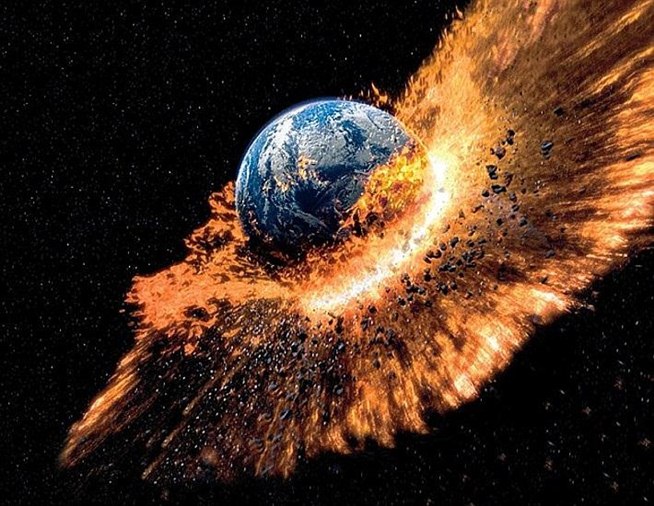
     Why is everyone freaking out about the end of the world? I'm only twenty-two and I've lived through more "end-of-the-world" scenarios than nearly any other era of history: Y2K and the electronics apocalypse of 2000, 9/11 and the terrorist attacks on the United States as well as the ensuing war, about twelve different dates for Armageddon, and now this--the end of the Mayan calendar. Is it that we have a fascination with death and destruction? Is it that we see something morally wrong with where we're all going? Or is it that it's really entertaining to propose a world-wide event and make believe that it'll happen?
     When I took a class on Fairy Tales, we discussed the stories as ways of coping with the moral dilemmas of our daily lives. The stories allowed us to live through these terrifying and traumatizing events without actually being physically harmed in the process, they were entertainment for the dark side of the human psyche. Is that what we're doing now, with these end of the world, death and destruction stories? Movies like 2012 and The Day After Tomorrow have become manifestations of our fear of the end of the world, and turning it into something that fascinates and entertains us. Decades ago, these same stories would be the Grimm versions of Cinderella, Rapunzel, Snow White, Iron John, and so many more myths and legends. They've been extended beyond the individual level--a single person's world is falling apart--to the destruction of all peoples and their worlds.
     Long, rambling, story short: these stories of Earth's destruction are the modern stories that help us deal with the problems of society and the fear of what's coming next. There is a place for such stories, but we, as everyday people, do not need to believe them in a literal sense.

Just a thought...
Stephie

PS. We're still here.

Saturday, November 24, 2012

Do I have ADD or is it my Generation?

     So I'm working on a giant paper that shall be the bane of my existence until it is complete, but I've noticed that lately I just can't focus for more than fifteen minutes at a time. Even when I can get those fifteen minute bursts to line up and form more than 45 minutes, there are three things I have to have on hand: 1. A cup of hot tea, 2. A clean working environment, and 3. My earbuds and music. The first two are more necessary when I want to sit down for more than twenty minutes, but the third is necessary for any work to be done. My question is: Why can't I work unless I block out the world with music?
     When my brother was little, his teacher wanted him to be checked out for ADHD (Attention-Deficit/ Hyperactivity Disorder)--he was seven and hyperactive as any seven-year-old boy is--the doctors concluded no, but a couple of the symptoms of ADD (Attention Deficit Disorder) linked with some of the behaviors that both my sister and I have been experiencing in the last couple years at college. Mainly the inability to focus for longer periods of time. Now, none of the doctors I've seen have said anything about having ADD, but I've noticed that when I can't hear the world around me, it's easier to focus. I've also noticed that I'm not the only one this works for.
     You can take a look at nearly any college library to find students listening to music while they study. This is the same group of students that can text and walk, listen to the television and hold a conversation, and play a video game while socializing with friends. Multi-tasking seems to be what we've been trained to do. I can keep track of four conversations at once, as long as I'm not actively involved in any of them, but why can't I just sit in a quiet room--even if I have my cup of tea and clean environment--and get anything done?
     There are a couple theories circulating that propose this inability to work without extraneous stimuli is a result of the multi-tasking my generation has been asked to do from such a young age. So why is my generation so different? We grew up with the computers, with the internet and all the flashing colors trying to get your attention, we have our portable music devices and our phones that all keep us going going going, and we've had them since we were little.
     I wonder about the children who are already experiencing what I've started going through in the last couple years: the lack of concentration without stimulation, what are they going to do in fifteen years when it all starts getting more pronounced? Will we have to have those sci-fi technologies where the computer display is in your head, just so the everyday person has enough background brain stimulation to focus on the foreground?
     Whatever happens, I just hope we realize that we're doing this to ourselves and our kids. Take the time to turn off all the electronics and interact with real people: they're way more stimulating and it eases the go-go-go of the brain.

Just a thought...
Stephie

Friday, November 16, 2012

Existentialism

     Nearly everyone I've talked to about existentialism has been confused about it. I'm a little confused how they can be so confused. From what I understand it's just the belief that existence is created from the choices and experiences of a person. Every person has the right to make their own decisions--this is where liberty and freedom come into it--and if a person doesn't have the freedom to make their own choices you're experiencing oppression. That's my understanding.
     Part of it though is a willingness to live with the consequences of your actions. I think that's where people get confused. We talk about how life isn't fair and how bad things happen to good people, which is true, but at the same time it's because the good people take responsibility for their actions that bad things happen to them. People I've classified as 'bad' in my life have had the tendency to let other people take the blame for their mistakes and missteps. And I've noticed that because the other people (the good people) are more willing to take the blame, even when it doesn't belong on their shoulders, the people I've always labelled 'bad' don't have to take responsibility for themselves.
     What happens when the 'good' people no longer are willing to take responsibility for someone else's actions? I like the ideas put forth by the school of Existentialism, for the most part, they make the world make sense.

Just a thought....
Stephie